
.png)


The early data around the 2026 FIFA World Cup confirms what many property managers were hoping to see: demand is coming. As of January 25, 2026, direct short-term rental bookings for the World Cup period are materially higher than they were at the same time last year. In several markets, bookings per property are not just up, they are up dramatically. Dallas–Fort Worth is seeing bookings per property more than triple year over year, Atlanta is up over 260%, Houston is up more than 220%, and Boston stands out with an increase of nearly 870%.
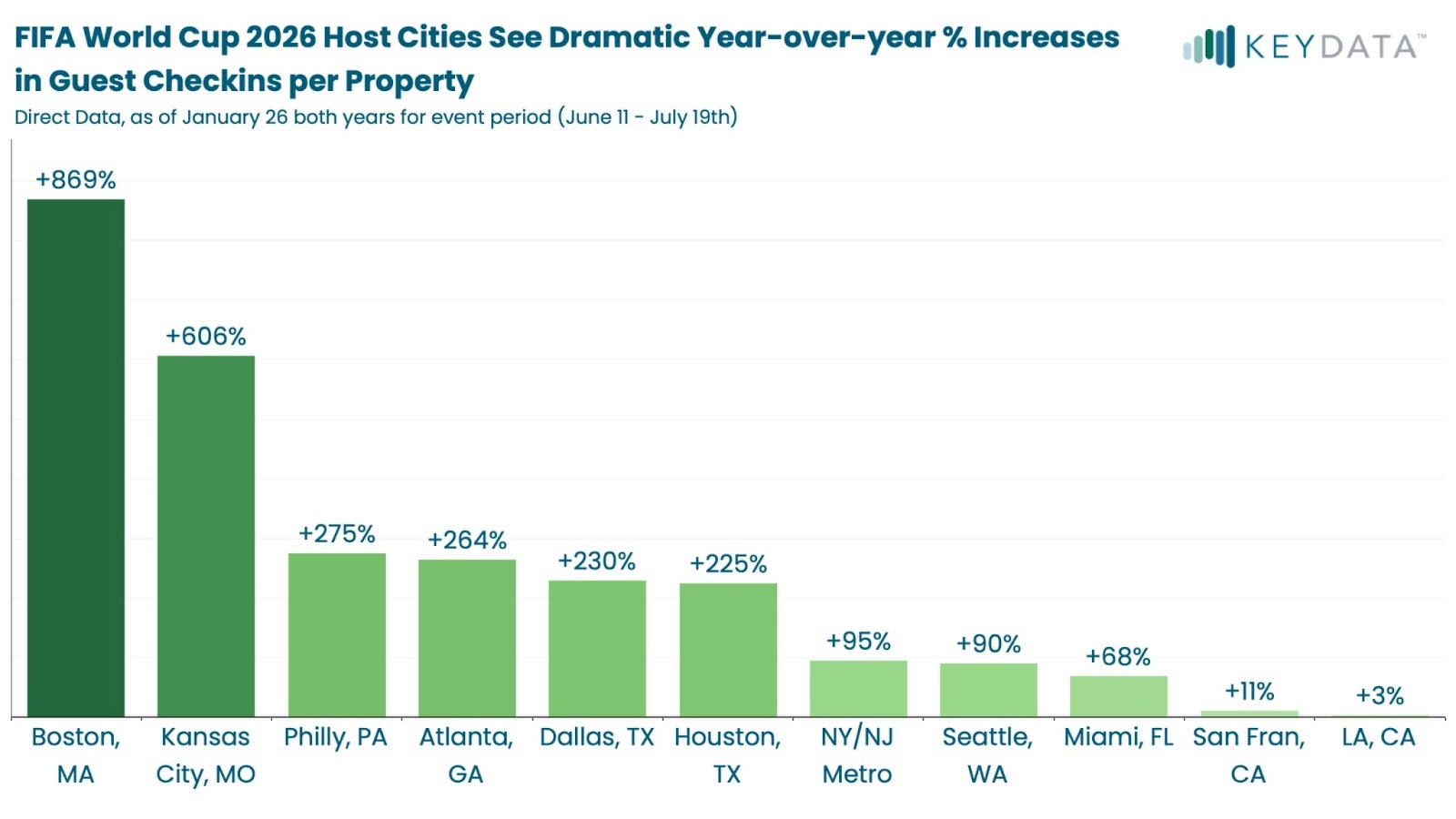
At first glance, this looks like a clear win for short-term rentals. But a closer look at booking behavior reveals that rising bookings and revenue are coming from shorter, more targeted trips, signaling a shift toward hotel-style demand patterns that STRs can capture if they are prepared.
World Cup demand is highly event-specific. Travelers are coming for individual matches or short clusters of games, not extended vacations. As a result, average length of stay is compressing across markets, and revenue growth is being driven primarily by higher nightly rates rather than longer bookings. In Boston, for example, revenue per property is more than six times higher year over year, but that growth is not coming from longer stays, it’s coming from shorter, higher-value reservations booked around specific dates.
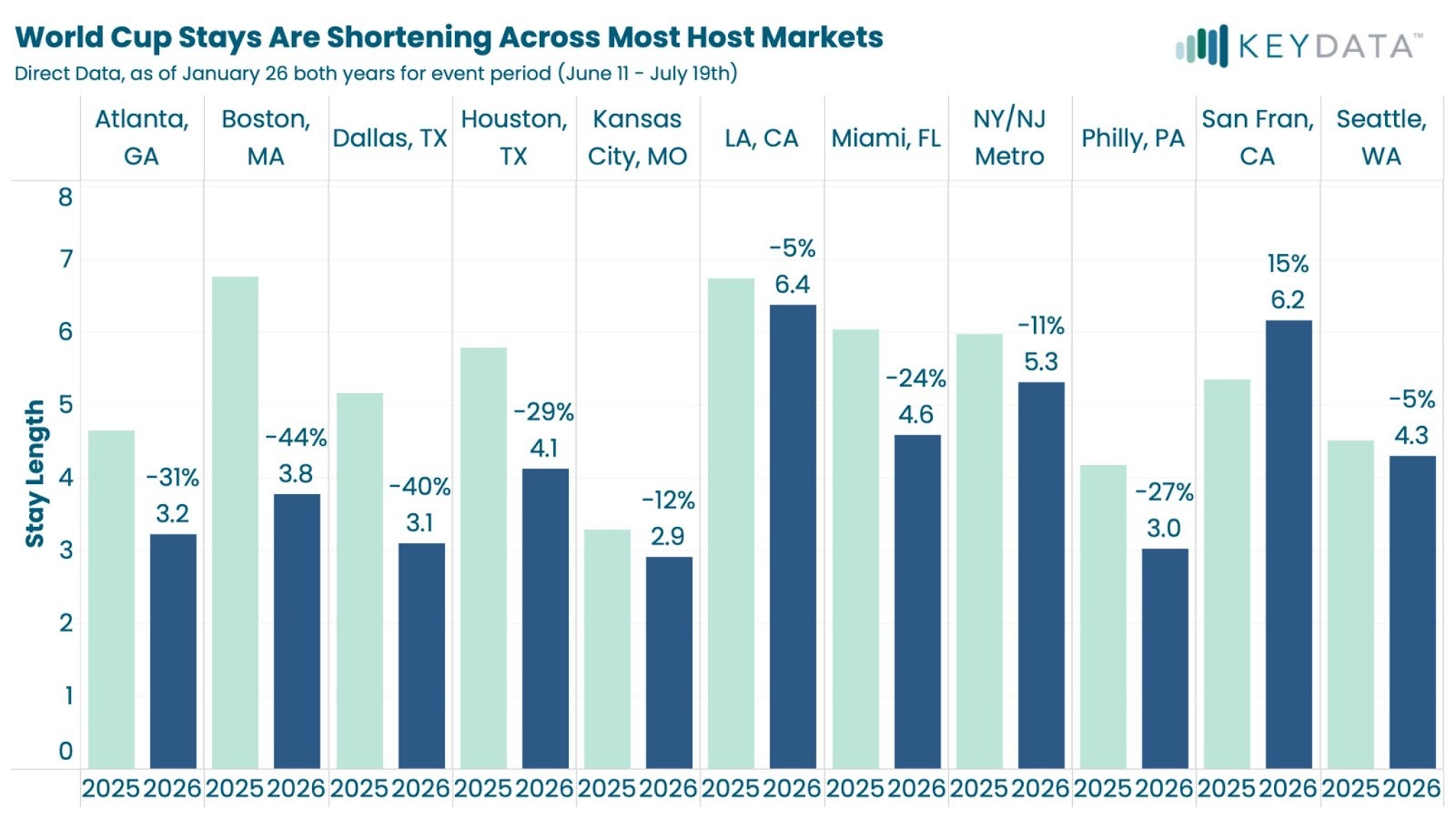
This shift matters because many STR portfolios are optimized for a different type of traveler. Minimum length-of-stay requirements, rigid weekend rules, and pricing strategies designed for weeklong leisure trips can unintentionally push World Cup demand toward hotels, even when travelers would otherwise prefer a short-term rental. The data suggests that this is already happening in some markets: demand exists, but only operators aligned with short-stay, high-turnover patterns are positioned to capture it.
The implication for property managers is clear. The World Cup is not behaving like a traditional peak season. It is behaving like a series of short, intense demand spikes, and success depends less on waiting for compression and more on structural readiness. Operators who are willing to selectively loosen length-of-stay restrictions, accept shorter bookings at premium rates, and position their homes as group-friendly alternatives to hotels will be best positioned to benefit. Those who maintain rigid rules designed for leisure travel risk watching a meaningful share of this demand flow elsewhere.
How Property Managers Can Prepare for World Cup Travel
- Plan for shorter stays. World Cup demand is increasingly match-driven, with many travelers booking two to three nights instead of extended trips. Portfolios optimized only for longer leisure stays risk missing this demand.
- Loosen length-of-stay rules selectively. Allow shorter stays around match nights while maintaining control before and after peak dates to protect revenue and reduce orphan nights.
- Price per night, not per stay. Revenue gains are being driven by higher nightly rates rather than longer bookings. Accepting shorter, higher-value stays can outperform waiting for longer reservations.
- Adjust pricing windows dynamically. Avoid setting pricing too far in advance without flexibility. Monitor pickup closely and be prepared to adjust as demand concentrates around specific matches.
- Compete where STRs win. Emphasize space, group accommodations, kitchens, and neighborhood access — benefits hotels can’t easily replicate.
- Capture shoulder demand. Market pre- and post-match stays to extend trips beyond game nights and smooth demand across the calendar.
- Prepare operationally for higher turnover. Shorter stays mean more frequent check-ins, cleanings, and guest communication. Staffing and systems should be ready for increased rotation.
- Don’t assume compression will come later. Event demand often books early and unevenly. Waiting for traditional peak-season patterns may result in missed opportunities.
The World Cup is not asking short-term rentals to become hotels, but it is asking them to meet hotel-style demand halfway. The operators who recognize that distinction early will be the ones who see real upside from the event.