



December performance across key mountain destinations presents important signals for destination marketing organizations (DMOs). While year-over-year occupancy trends were mixed, ADR growth remained strong in several markets, supporting overall revenue performance. However weather, particularly snowfall reliability, emerged as a defining factor shaping booking confidence, cancellation behavior, and revenue outcomes.
Markets that benefited from colder temperatures and consistent early-season snowfall saw more stable demand, longer booking windows, and lower cancellation impact. Conversely, destinations experiencing warmer-than-normal conditions and delayed snow faced elevated close-in cancellations and greater revenue risk, even where ADR growth was strong.
Together, December data reinforces that weather is not just a backdrop for winter travel. It is a leading indicator of demand stability and revenue performance.
Year-over-Year Performance: Occupancy and ADR
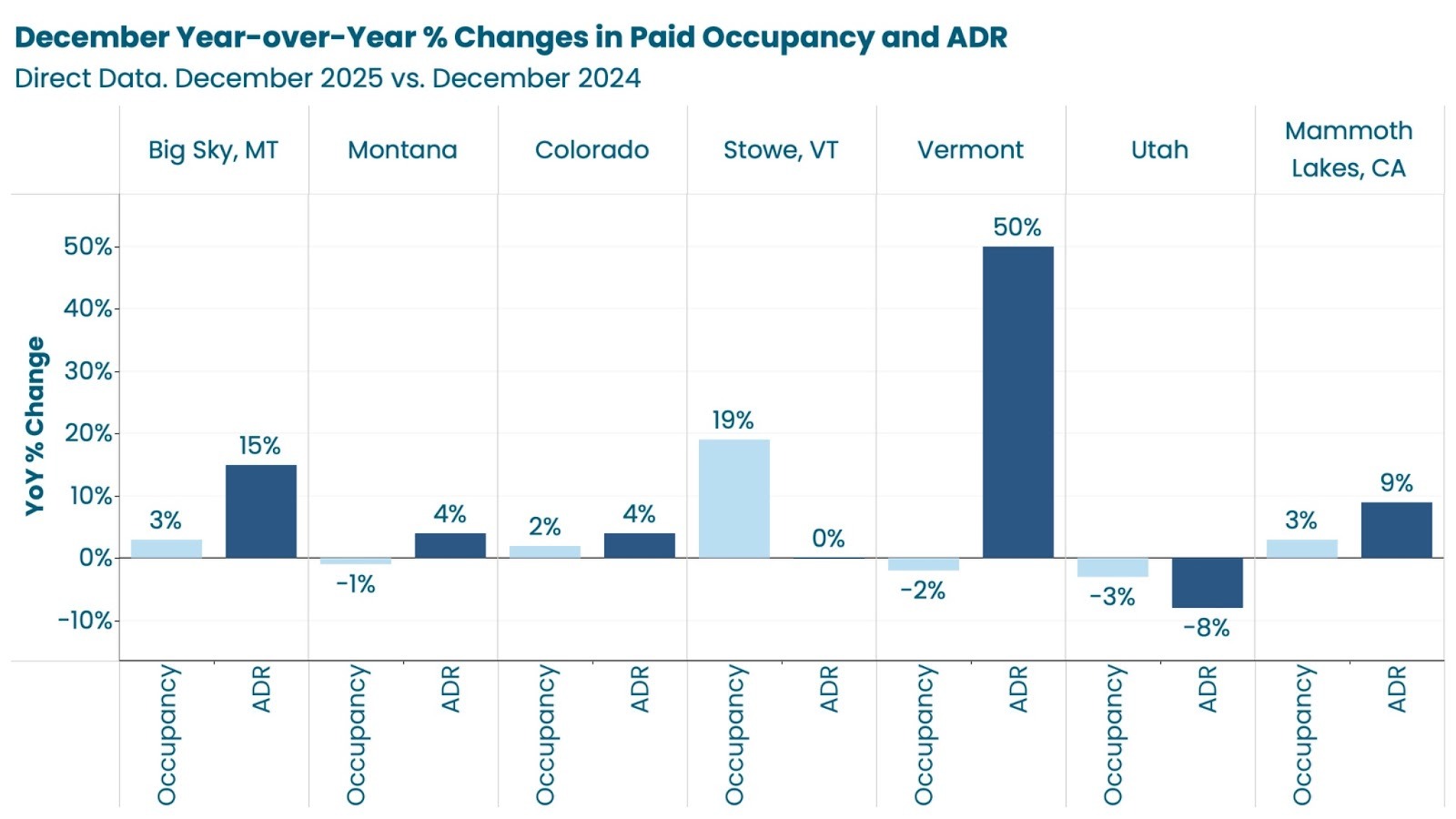
December results highlight how pricing strength, rather than pure volume growth, shaped performance across mountain markets.
- Occupancy trends were uneven, with modest gains in select destinations and slight declines in others, reflecting variable demand across regions.
- ADR growth played a stabilizing role, particularly in Vermont, Big Sky, and Mammoth Lakes, where rate increases helped offset softer occupancy.
- Markets such as Stowe, VT demonstrated that strong demand can still materialize even amid broader variability.
For DMOs, these patterns reinforce the importance of messaging that emphasizes the broader destination experience—such as dining, events, culture, and attractions—while helping stimulate demand during softer travel periods.
Cancellations: Volume vs. Revenue Impact
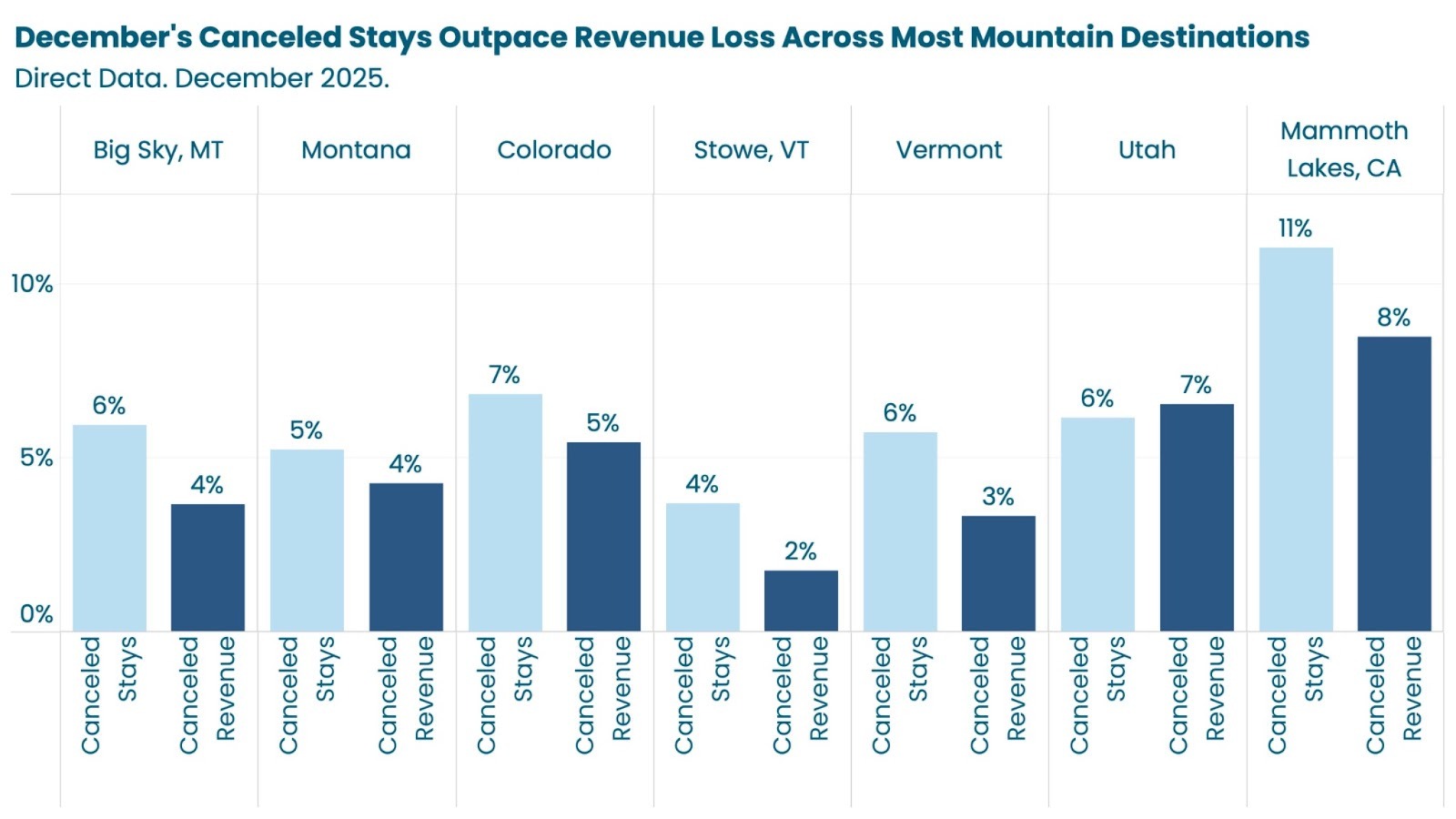
Although cancellation activity remained elevated in December, the impact on revenue was meaningfully lower than the volume of canceled stays.
- In most destinations, canceled stays exceeded canceled revenue, indicating that higher-value bookings were retained or replaced.
- This dynamic suggests healthy underlying demand and the ability of markets to absorb cancellations through rebooking or short-window travel.
- Mammoth Lakes experienced the highest cancellation levels, yet revenue loss remained proportionally smaller.
From a destination perspective, this resilience highlights the value of maintaining visibility and marketing presence even during peak cancellation periods.
Booking and Cancellation Timing
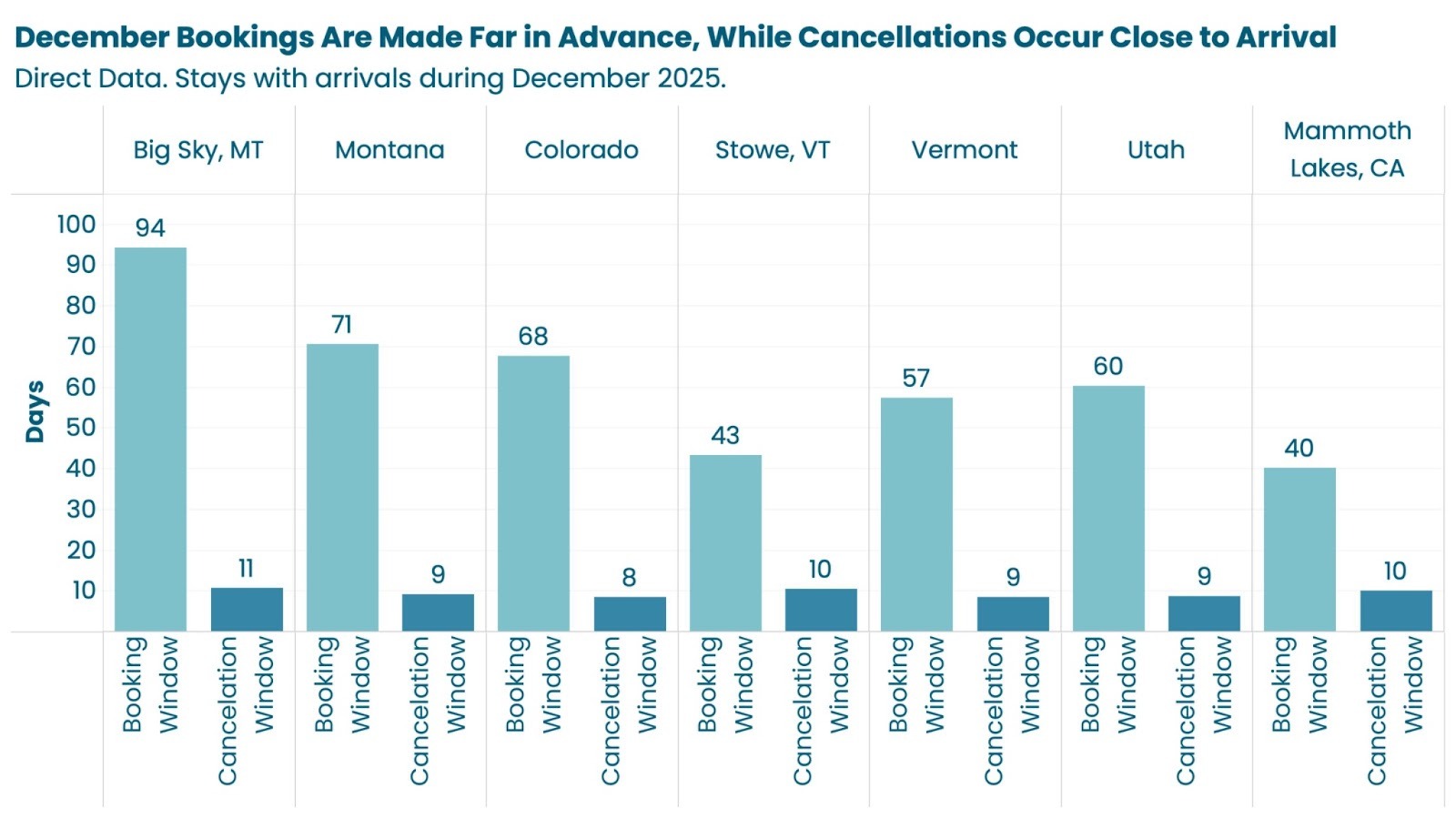
Traveler booking behavior continues to be consistent across mountain destinations, with clear implications for marketing strategy.
- Bookings are made well in advance, often one to three months before arrival, particularly in drive-to and high-loyalty markets like Big Sky and Montana.
- Cancellations cluster close to arrival, typically within one to two weeks of check-in across all destinations.
This timing gap creates an opportunity for DMOs to activate late-stage campaigns, promote events, and support last-minute travel when inventory re-enters the market.
Insert Graph 3 here: December Bookings Are Made Far in Advance, While Cancellations Occur Close to Arrival
The Weather Connection
December weather patterns help explain much of the divergence seen across mountain destinations, reinforcing the link between conditions on the ground and booking behavior.
- Western markets (Utah, Colorado, and the Sierra) experienced warmer-than-normal temperatures and delayed snowfall. These conditions aligned with higher cancellation rates and greater revenue leakage, particularly as cancellations occurred close to arrival.
- Northeast markets, especially Vermont, benefited from colder temperatures and more consistent snowfall. These conditions supported lower cancellations, stronger ADR performance, and more stable revenue outcomes.
For DMOs, December underscored how weather variability can materially influence short-term performance, even during peak season.
What Weather Factors Matter Most
A regression-style read of December performance points to three primary weather-driven influences on demand and revenue:
1. Snowfall (Most Influential)
More snowfall is directly associated with fewer cancellations and reduced revenue loss. Markets with reliable snow conditions retained bookings more effectively.
2. Temperature Anomalies
Warmer-than-normal Decembers correlated with higher cancellation activity, particularly in ski-dependent destinations.
3. Timing of Snowfall
Weak early-season conditions led to cancellations closer to arrival. When snow did not materialize early, rebooking windows narrowed, limiting recovery opportunities.
These factors help contextualize why some markets saw strong booking demand but still faced revenue risk late in the cycle.
What This Means for DMOs
- Weather is a demand signal: December reinforced that weather is not just contextual, it is a leading indicator of visitation and revenue performance in ski markets.
- ADR alone cannot offset risk: Strong rate growth does not fully protect destinations from weather-driven cancellations.
- Snow reliability supports confidence: Early and consistent snowfall encourages longer booking windows and lowers cancellation rates.
- Late cancellations magnify risk: Short cancellation windows increase revenue exposure when conditions deteriorate.
As climate volatility increases, DMOs play a critical role in helping partners manage expectations, maintain traveler confidence, and activate demand when conditions shift. Aligning marketing, messaging, and real-time conditions will be increasingly essential to supporting sustainable winter performance across mountain destinations.