



In the first half of 2025, the demand for U.S. vacation rentals increased by 3%. This is a notable and welcome turnaround from the 4% decline in the first half of 2024. While there are some recovery signals pointing at a renewed phase of growth, it remains essential for property managers to stay vigilant and proactive. Because of this, it’s more crucial than ever to take advantage of this opportunity by diversifying their sources of demand.
Now is the time to consider working with websites that will bring them the new audiences and incremental demand year-round. For U.S. property managers looking to maximize bookings and revenue, one group stands out above all: families.
Why Is Appealing To Families So Important?
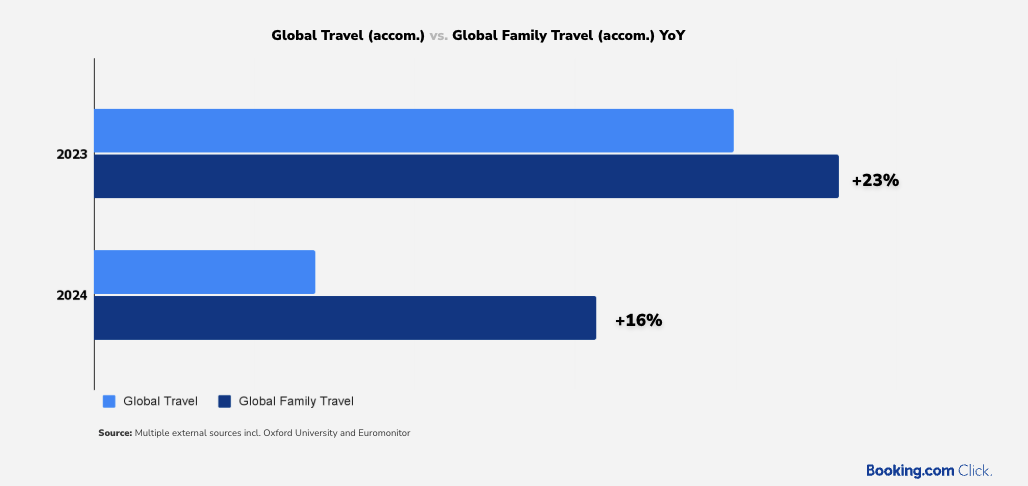
Family travel is experiencing robust growth, with double-digit increases in travel spend globally and forming a significant segment of the traveller base. According to Euromonitor, total family travel spend grew by 23% in 2023 and 16% in 2024. On Booking.com, families were the fastest-growing traveller segment in 2024—growing more than three times faster than other travellers globally. As growth is set to continue, families represent a key market segment for property managers seeking to capture travel demand and grow their business.
U.S. Summer Performance
As families across the country planned their summer getaways, the vacation rental market continued to evolve, revealing some new patterns. Based on direct performance data as of August 18 2025, this year’s numbers highlighted shifting guest behavior and market conditions across the U.S.
Although the demand for vacation rentals is up for 2025 as a whole, summer vacation rental performance across the U.S. has dipped slightly year-over-year. Paid occupancy rates were down 1%, sitting at 44%, while average daily rates (ADR) also decreased marginally by 1%, to $368 for June through August. Revenue per available rental (RevPAR) fell 2%, down to $162.
For property managers, the soft summer demand compared to the growth in 2025 highlights the importance of a thoughtful strategy. There is demand for travel, but capitalizing on it requires a more proactive approach. Beyond decreasing minimum night stays and offering discounts, adapting who they are targeting can be an excellent strategy.
Attracting high-value visitors is an evergreen strategy for maximizing the revenue and impact of each night booked—regardless of season or fluctuating demand. According to Booking.com’s Travel Trends research, 42% of U.S. family leisure travelers said they took a trip with their immediate family in 2024. Families stay longer, book more add-ons, spend more per night, and are 24% more likely to leave a review compared to other travellers. In addition, 37% of families plan to spend more on vacations in 2025 than 2024. So, families are an excellent group to target with marketing and special offers, which is further demonstrated in the performance of family-focused destinations.
How Do Family-Focused Destinations Compare?
Although summer bookings across the U.S. are down, not all destinations are feeling the same pains. Orlando, Florida, and Gulf Shores, Alabama are instant hits with families due to their available space and nearby attractions. The regions with stable performance and even growth highlight exactly why reaching families is so important.
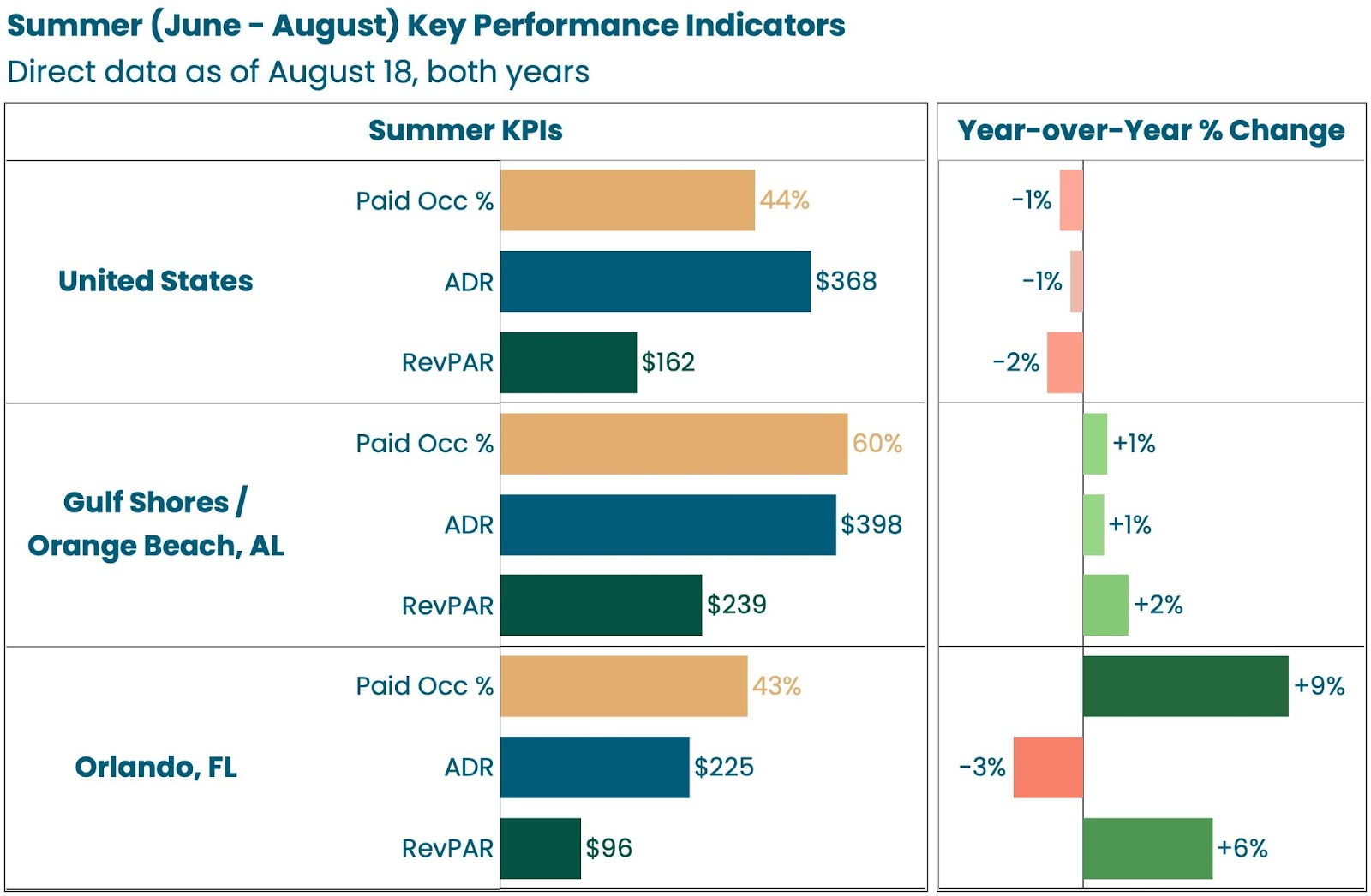
Orlando, Florida, stands out this summer as a strong-performing market. Paid occupancy is up 9% year-over-year, showing a solid increase in guest demand. Although the average daily rate has dipped by 3%, property managers in the markets are seeing a 6% increase in RevPAR, reflecting healthier overall performance even at slightly lower rates.
Gulf Shores & Orange Beach, Alabama saw a strong summer performance with paid occupancy at 60%, in comparison to the U.S. average of 44%. This family-friendly destination experienced year-over-year growth across the board for paid occupancy, ADR, and RevPAR.
Family-focused destinations tend to experience particularly busy summers due to the ease of travel while school is out. Top family-friendly destinations are able to accommodate large influxes in demand during the busy summer travel months. For example, in 2024, Gulf Shores experienced 86% higher paid occupancy in the summer months of June through August. Summer paid occupancy reached 60% in 2024, while paid occupancy hovered around 32% for the rest of 2024.
Although some destinations are known to be family-centered, there are many ways property managers can tailor their strategies to attract families to stay.
How to Capture Incremental Family Demand
Next-level visibility through cutting-edge GenAI technology
Families travel in various waves during the year, with summer being the highest peak, and other popular times including school breaks. Taking advantage of the built-in time away from school, families tend to prioritize travel in these periods to unwind, rebalance, and reenergize.
According to Booking.com’s research, family travel planning is one of the most complex types of travel. The stakes are high and the needs are very individualized. The purpose of a trip can range from simple relaxation for parents and entertainment for the kids to an educational and multi-generational family bonding trip. Factors such as the number of kids and age mix can entail new requirements for safety, entertainment, food, and activity needs. This is where GenAI technology comes into play, to make things simple and truly tailored to every person in the group and trip instance. The family planner explores the best curated choices to fit their group’s needs and the curated list of properties is displayed to showcase the unique benefits they provide.
For property managers, listing on platforms that invest in generative AI—such as Booking.com—can significantly increase reach and visibility among families. Booking.com's AI-powered smart filters allow travelers to describe, in their own words, what matters most to them, enabling a more flexible and personalized search experience and preventing travellers from narrowing down too much at the start of their exploration. In this way, they explore a curated choice of accommodation options that addresses their unique needs, as GenAI technology synthesizes rich information about each accommodation: from facilities, to photography, answers to FAQs and even the most recent family traveller reviews.
With GenAI seamlessly embedded in the traveller’s exploration experience, property managers have an increasing opportunity to reach additional travellers who are learning to search based on their needs. 1 in 3 travellers who arrive at Booking.com’s website without a defined type of stay in mind eventually book vacation rentals—representing a major source of untapped demand for property owners.

Expanding Reach: Are Your Listings Where Families Look—Or Are You Missing Out?
Families value choice. Booking.com’s Travel Trends 2025 research found that in 2024, 84% of families booked hotels and 66% opted for a vacation rental. This demonstrates the flexibility that families seek, choosing stays that match their specific trip needs, which may vary not only between trips but also within the same year. These preferences often shift in response to changes in family composition, the mix of children's ages, and evolving family dynamics.
Given the clear preference for flexibility, it’s no longer enough to rely solely on vacation-rental-only platforms. Families often start their travel planning with a broad set of options and value the ability to compare properties based on their specific needs—not just property type. To fully reach and convert this high-value audience, property managers need visibility on platforms that present a diverse range of property types and leverage smart search–such as Booking.com. This approach ensures properties are positioned effectively for families with different preferences, expanding reach and increasing booking potential as demand patterns continue to evolve.
Catering to Family Traveller Needs
Property owners and managers have a unique opportunity to capture more family bookings by proactively meeting the needs of this segment. Booking.com’s family traveller ‘pyramid of needs’, grounded in research on what families value, offers a clear and practical framework to attract and convert high-value family travellers by addressing the key factors that matter most to them:
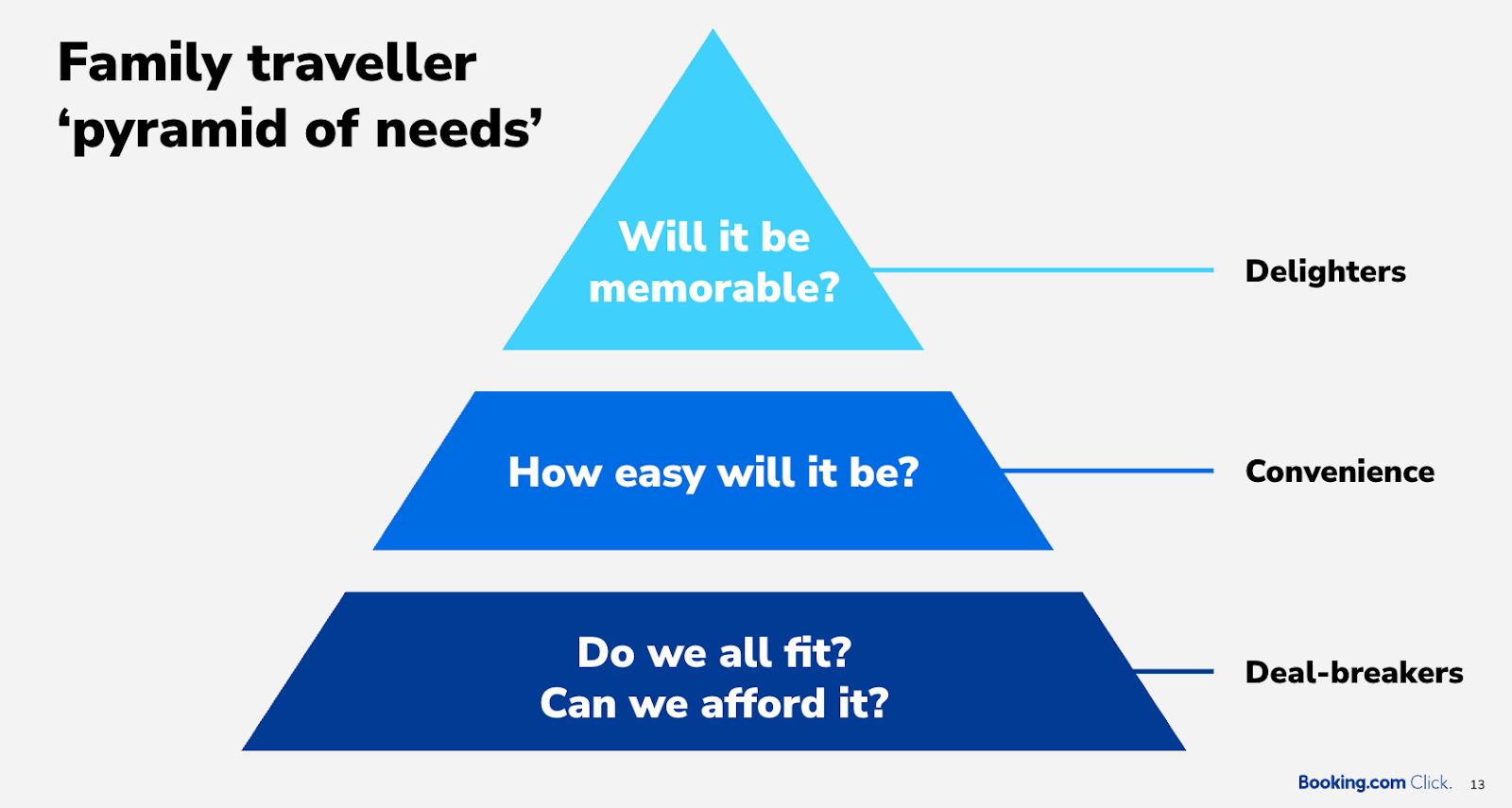
- The first deal-breaker for families: “Do we all fit?”
Regular review of room capacity settings is essential to ensure listings are accurate and up-to-date for all family compositions. Each listing should specify how many adults, children, and infants can stay and sleep at the property. Without this information, properties may not appear in family searches. It is important to include the number of bedrooms, beds, and guaranteed cots, as well as photographs of every room—families look closely at every detail to determine whether there’s adequate and suitable space for everyone.
- The second fundamental question is an initial scan of the budget: “Can we afford it?”
During the initial narrowing-down phase, families want to understand the upper and lower bounds of the total budget for various locations. Alongside the previous space configuration step, it is important to clearly define the charges, policies, and fees for children and pets to avoid presenting an unappealing total price for the whole family. Consider whether children can stay for free or at a reduced price compared to adults when the room night rate is charged per number of guests.
- Once families establish that a property fits their composition and budget, the next priority is convenience—“How easy will it be?”
Property owners and managers should evaluate how well their content communicates day-to-day comfort and suitability for family life. It is essential to keep amenities and facilities up to date in the listings. Uploading high-quality, wide-angle photographs that showcase the location, space, safety, and distinctive family-friendly features is strongly encouraged, as these visuals are central to how families quickly judge suitability and envision their trip.
To further strengthen appeal, listing content should go beyond standard amenities. It is important to mention details like parking options, fenced-in yards, proximity to recreational activities, and kitchen setups that are especially valuable for families with children. Booking.com’s GenAI-powered tools will automatically highlight these features to the right audience searching for family-friendly properties, increasing the chances of bookings.
- Finally, focusing on ‘delighters’ – “Will it be memorable?”
To encourage memorable family stays, enjoyment and extras can create lasting experiences—such as access to pools, curated activity suggestions, or paid extras like parking, food and drinks, transport services, or wellness packages. On Booking.com, these add-ons can be merchandised right at the point of search and booking, helping to capture a segment known for longer stays, higher spend, and higher chance of leaving reviews, which can benefit long term performance and appeal.
By applying these principles, property owners and managers can help families assess the property’s full offering and make an informed choice—resulting in truly incremental demand, not just shifting bookings from other websites.

Make the most of bookings by tailoring the marketing strategy to attract family vacations in 2025. With visibility among high-value family travelers more important than ever, partnering with a platform like Booking.com is a smart move—their year-round marketing and investment in generative AI helps properties get seen and booked by families that otherwise might not be reached.