
%20(1).png)


A Record-Breaking Start for Summit County
The upcoming ski season (November–April) is already shaping up to be one of the strongest in recent memory. Direct source data from over 85 local property managers shows that Summit County is pacing ahead of previous years in nearly every key metric. Major holidays are leading the charge: Thanksgiving and Christmas are red-hot, and early Easter timing is helping to extend the busy period further into spring.
Occupancy, Rates, and Revenue Keep Climbing
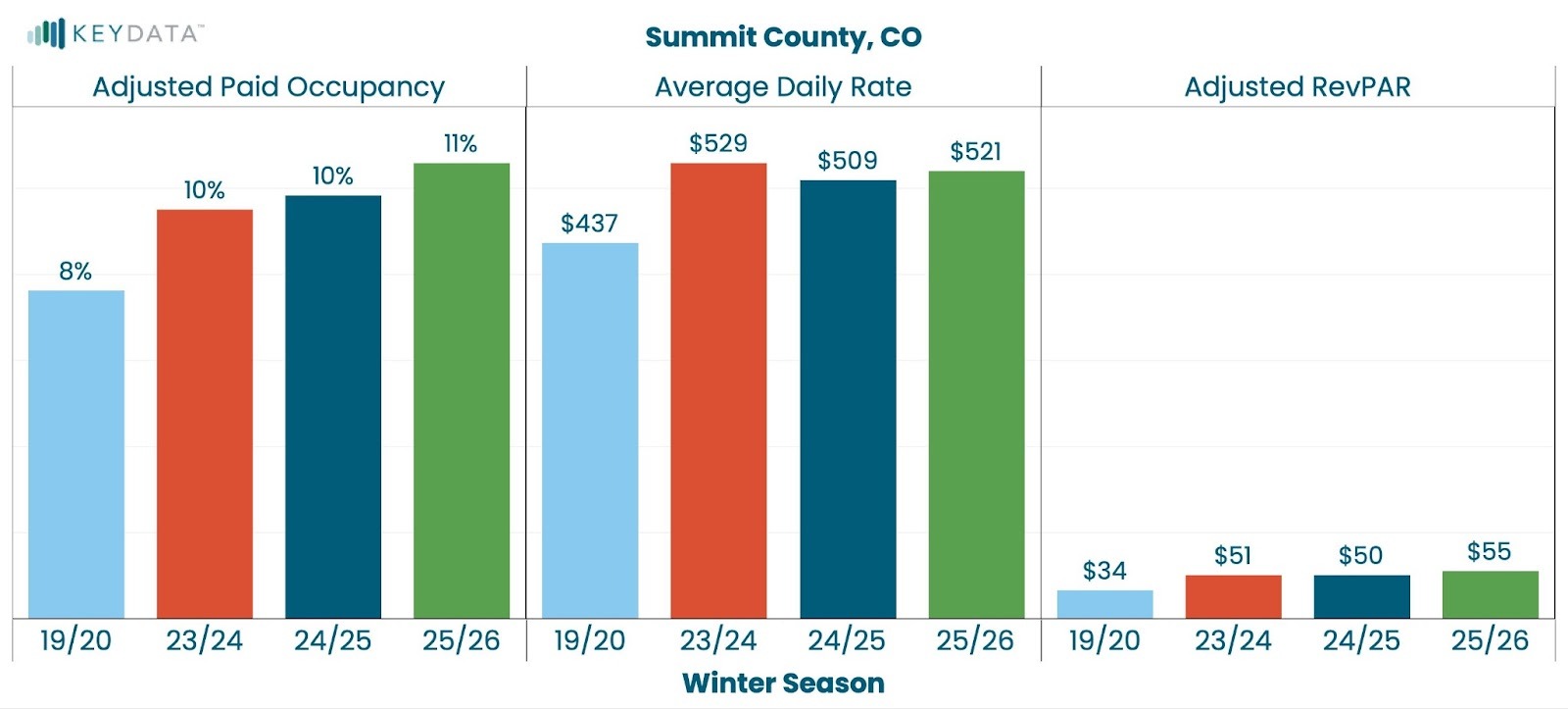
Summit County’s lodging market continues to surge ahead, with every key performance metric trending upward for the 2025–26 ski season.
As of late September, adjusted paid occupancy stands at 11%, up from 10% in 2024–25 and 8% in 2019–20, marking the strongest early-season pacing in years. These earlier bookings are translating directly into higher revenue; Adjusted RevPAR (Revenue per Available Rental) has climbed +7% year-over-year, increasing from $51 to $55.
At the same time, travelers are spending more per night. The average daily rate (ADR) for Summit County properties now averages $521, up from $509 last season, a +2% year-over-year increase.
Longer Stays, Greater Impact
Data shows that guests are planning longer trips. Average stay lengths are up +3% in November, +6% in December, +4% in January, and +22% in April. Longer stays don’t just mean higher revenue for property managers, they also bolster local restaurants, shops, and recreation services. Longer vacations translate directly into a greater economic impact for local businesses.
Early Bookers Defy National Trends
While many U.S. destinations are seeing travelers wait until the last minute to book, Summit County bucks the trend. Booking windows are expanding slightly, pacing 1–5% longer across most winter months, indicating that visitors are planning ahead for their ski adventures. This suggests growing consumer confidence and a well-established demand pipeline for local property managers.
Healthy Competition Across Markets
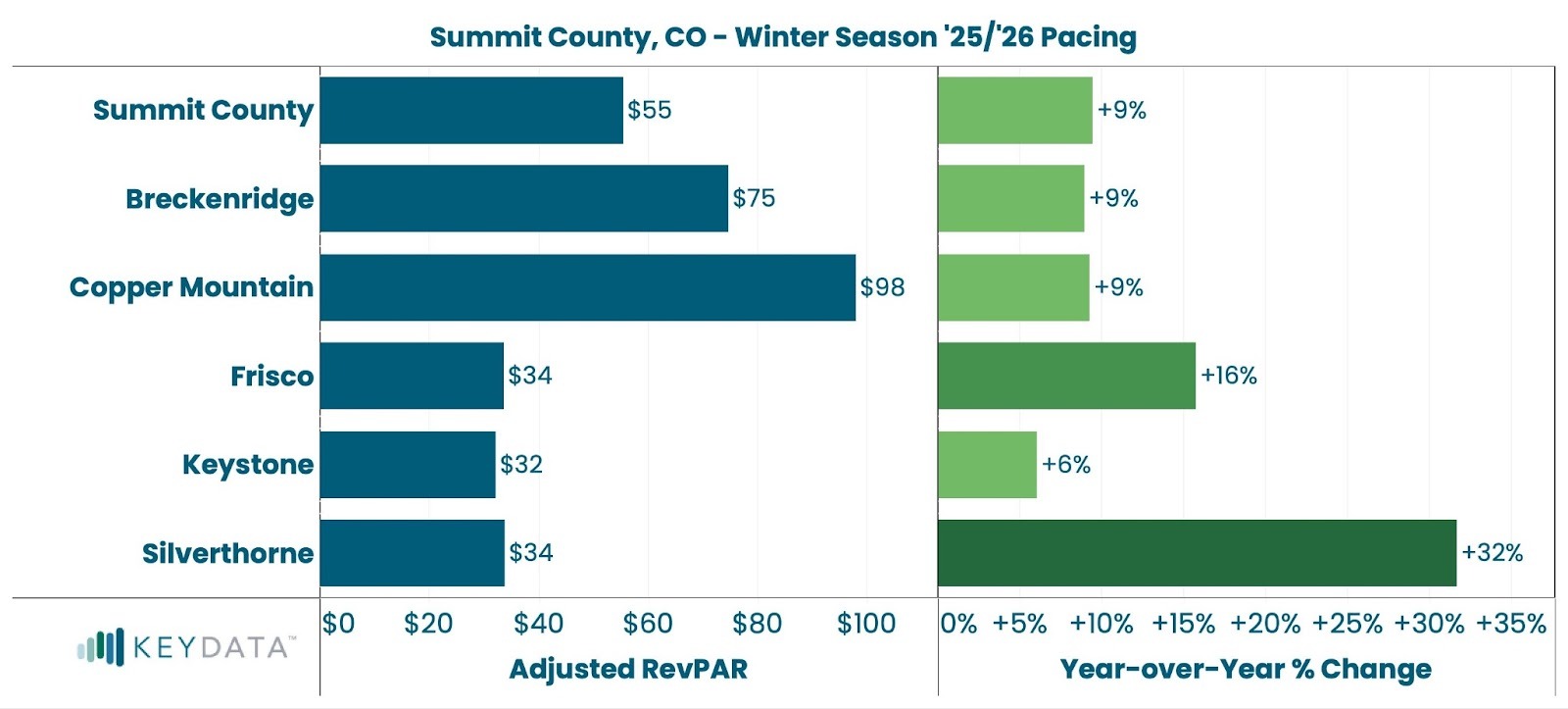
Zooming out to compare nearby markets, Summit County continues to hold its own in Colorado’s highly competitive ski landscape. Data from the 2025/2026 winter season shows that occupancy is pacing ahead of last year across nearly all Summit County markets; Breckenridge, Frisco, Keystone, and Silverthorne among them. The only exception is Copper Mountain, which is pacing slightly behind, with plenty of time to catch up.
Similarly, average daily rates are rising everywhere but Keystone, with Silverthorne posting particularly strong gains. Overall, adjusted revenue per available rental (Adj RevPAR) is climbing countywide, signaling robust market performance heading into the season.
Colorado Ski Markets: Strength Across the State
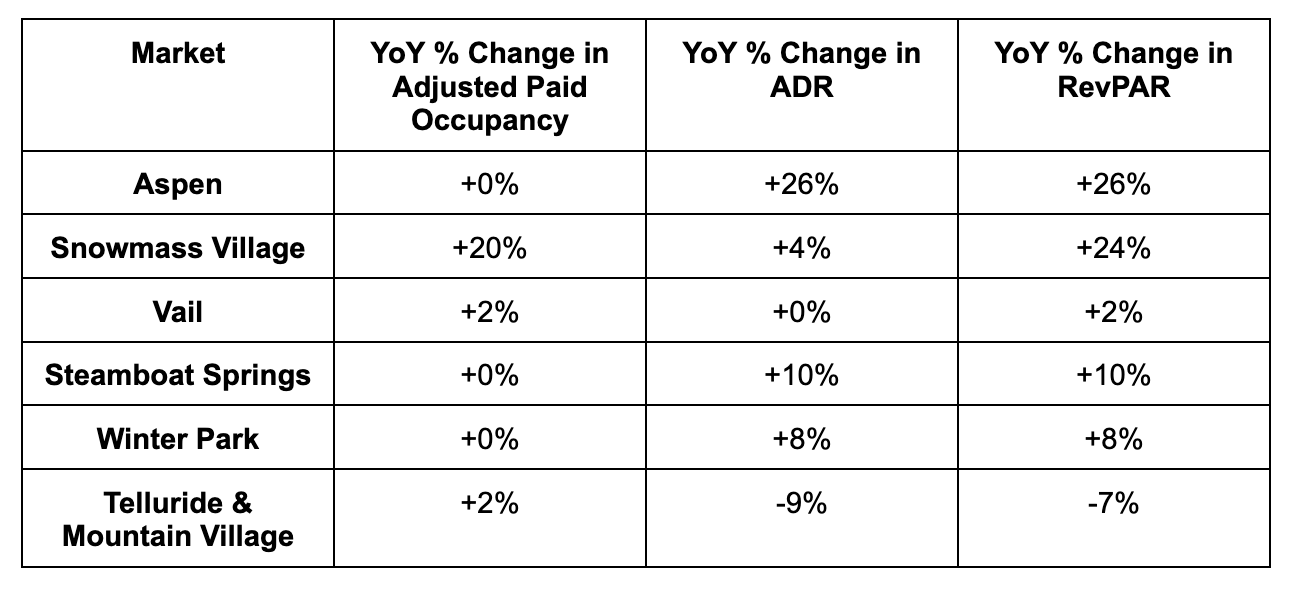
When comparing Summit County with other major ski destinations, including Snowmass, Aspen, and Steamboat Springs, the trend remains consistent: pacing is mostly positive across the state.
Who’s Coming to the Slopes?
Top feeder markets for the 2025/2026 ski season so far include Texas (17.5%), Florida (10.3%), and Colorado (8.1%), followed by Missouri and Illinois. These figures closely mirror last year’s distribution, reaffirming that Colorado’s resorts continue to appeal strongly to both in-state and southern markets, particularly travelers escaping warmer climates for mountain snow.
Key Takeaways
In summary, Summit County’s ski season is off to a remarkable start:
- Higher rates, occupancy, revenue, and booking windows all signal a booming winter ahead.
- Guests are unfazed by economic headwinds, maintaining strong demand for premium stays.
- Summit County’s performance aligns with broader Colorado trends, where most markets are pacing higher in both occupancy and ADR.
As the data shows, the mountains are calling and guests are already answering.