



Key Takeaways:
- Google Hotels places hotels and vacation rentals side by side, meaning your competitive set now includes professionally managed short-term rentals (STRs) at the point of search.
- Google shows visible pricing and availability, but not vacation rental performance drivers like occupancy, booking pace, ADR, or RevPAR, so additional market intelligence is required for complete context.
- Pair Google Hotels' visibility with independent market data to validate positioning, anticipate event-driven demand shifts, and support smarter revenue and planning decisions.
Hotels are no longer competing only against other hotels. Today, your property appears alongside vacation rentals in the same Google Search results, Google Maps listings, and Google Travel interface—often on the same price-comparison screen.
Most hotel operators already know that Google displays their properties via the Google Hotels API, yet many still treat it purely as a distribution channel, overlooking that it functions as a real-time competitive intelligence window that shows how your rates, availability, and positioning compare directly with short-term rentals in your market.
The U.S. vacation rental market is expected to grow to around $102.86 billion by 2030 at a 7.4% CAGR, reinforcing the importance of improving digital discoverability while protecting core revenue streams.
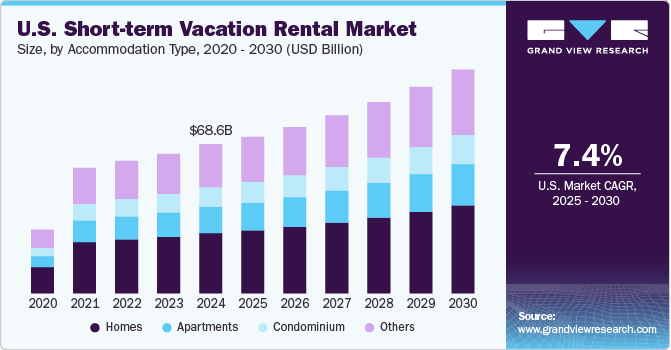
Source: Grand View Research
In this article, we’ll review how the Google Hotels API works, why it has become essential for competitive intelligence, and how to optimize for visibility.
What Google Hotels API Means for Hotel Operators
Google’s hotel search experience helps travelers discover, compare, and book accommodations, with search results that can also extend to vacation rentals and other lodging options—reflecting how comparison increasingly spans multiple accommodation types.
Competition is no longer limited to nearby hotels. A guest searching on Google may evaluate a branded hotel, an independent property, and a professionally managed vacation rental within the same search results page before deciding.
Google has created a blended competitive environment in which your rates, availability, reviews, and property positioning appear directly alongside those of alternative lodging options.
The Google Hotels API allows you to send inventory, rates, and availability data to Google via integrations with property management systems (PMS), central reservation systems (CRS), or distribution partners.
Google aggregates this information across:
- Direct booking engines
- Online travel agencies
- Metasearch connections
Your property can appear across Google’s Search, Maps, or Travel pages, directing travelers to the booking path you have enabled.
Vacation rental inventory has expanded across many destinations, and travelers are increasingly evaluating hotels and rentals for the same trip purposes. The U.S. STR supply reached an all-time high of 1.79 million available listings in August 2025.
Google’s display environment does not prioritize one accommodation type over another. Listings compete based on relevance, pricing transparency, availability, and perceived value.
How to Optimize Your Hotel's Google Hotels Presence
Optimizing your presence on Google Hotels can improve operational accuracy. Your performance on Google Hotels starts with data quality. If inventory feeds are incomplete or delayed, your property may appear unavailable or incorrectly priced compared to competing listings.
As a hotel operator, you should regularly confirm that:
- Your PMS or CRS is sending complete rate and availability feeds to Google.
- Pricing and inventory are updated in near real time.
- Property descriptions accurately reflect current amenities and positioning.
- High-quality images are displayed across desktop and mobile experiences.
- Booking links route guests to the correct booking pages.
Strategic Pricing
Rate comparisons are instant on Google Hotels. Travelers can compare hotel pricing with competitors and nearby vacation rentals in seconds.
Focus on visibility-informed positioning:
- Monitor how your displayed rates compare across accommodation types.
- Identify when vacation rentals compress pricing during peak demand or events.
- Evaluate how rate changes influence click-through rates and booking behavior.
- Reinforce value-based messaging instead of competing on price alone.
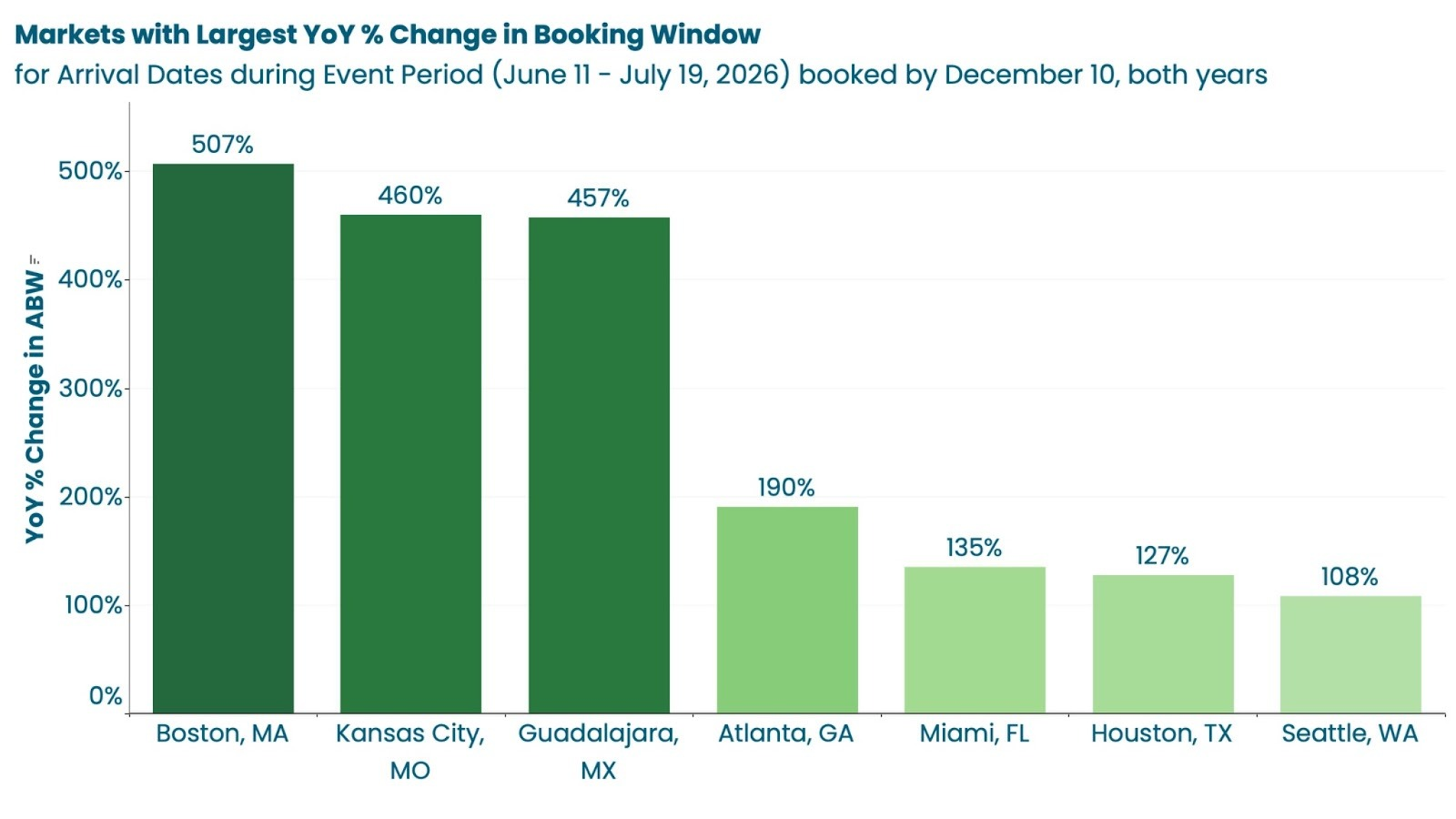
Global events can quickly shift demand across all lodging categories. For example, the release of the FIFA World Cup 2026 schedule showed host cities experiencing reservation increases exceeding 1,000% year-over-year in some markets, reshaping competitive pricing dynamics almost overnight.
Leverage Property Features and Amenities
Ensure your listing clearly highlights differentiators that other vacation rentals may lack:
- Daily housekeeping and staffed front desk support.
- On-site dining, meeting space, and business services.
- Loyalty program benefits and brand standards.
- Reliable service expectations for corporate and group travel.
Location and Search Optimization
Google Hotels is tightly connected to Google Maps and local search behavior. Visibility depends as much on geographic relevance as pricing. You should regularly verify:
- Accurate property location pins in Google Maps.
- Association with nearby landmarks, venues, and business districts.
- Appearance in neighborhood and destination searches.
- Which queries trigger hotel listings vs. vacation rentals nearby.
What Google Hotels Shows About Vacation Rentals
When travelers search for accommodations, Google surfaces a blended set of options, revealing several useful signals:
- You can identify professionally managed rental inventory competing for the same traveler searches.
- Hotels and vacation rentals are displayed within similar price ranges, allowing you to observe how rate positioning influences perceived value.
- Click behavior, pricing responses, and search visibility can indicate whether travelers prefer hotels or rental alternatives for specific trip types.
- Map results show where vacation rental density clusters around your property—often revealing neighborhood-level competition not captured in traditional hotel comps.
While Google Hotels provides strong visibility, it does not expose the underlying performance dynamics driving those listings, such as:
- Vacation rental occupancy levels and booking pace.
- Market-wide ADR and RevPAR performance.
- Forward-looking demand signals or seasonal shifts.
- True market share distribution between hotels and STRs.
Google shows availability, but not performance. However, EnterpriseData can aggregate verified, direct-source reservation data across professionally managed vacation rentals, allowing you to understand market trends.
While Google Hotels answers the “what”, revenue strategy requires the answer to the “whys.” Understanding vacation rental performance enables you to:
- Interpret whether rate pressure is coming from demand growth or supply expansion.
- Adjust pricing and inventory strategy based on independent market conditions.
- Identify when vacation rentals are capturing group, extended-stay, or event-driven demand.
- Plan staffing, marketing, and revenue strategy using forward-looking signals.
Key Data’s America 250 travel analysis shows booking windows in some U.S. markets extending to over 330 days in advance, signalling demand materializing far earlier than traditional urban booking patterns.
Using Market Intelligence to Stay Competitive
Track Vacation Rental Market Performance
To compete effectively, you need visibility beyond listed rates, such as:
- Vacation rental occupancy trends, ADR, and RevPAR within your competitive market.
- Changes in short-term rental supply, including new inventory entering or leaving the market.
- Seasonal demand patterns and booking windows, which often differ from traditional hotel booking cycles.
- Traveler behavior shifts, such as family, extended-stay, or event-driven demand moving towards rentals.
Lodging markets experienced a 72% increase in RevPAR during the 2027 Sundance Film Fest period, highlighting how large events can simultaneously reshape demand across accommodation types.
Inform Pricing and Revenue Strategy
Market intelligence supports revenue strategy by helping you:
- Benchmark hotel performance against both hotel competitors and vacation rental trends.
- Understand whether rate pressure reflects demand strength, supply growth, or shifts in traveler preferences.
- Identify opportunities when hotels can capture demand from vacation rental alternatives.
- Validate rate positioning decisions observed in Google Hotels results.
Support Strategic Planning
You can use blended lodging data to:
- Evaluate how market share shifts between hotels and vacation rentals over time.
- Identify destinations where STR growth signals competitive risk or expansion opportunity.
- Inform renovation, amenity, and service investment decisions.
- Support owner and stakeholder conversations using total market performance data.
Combine Google Hotels Visibility With Market Intel
The strongest competitive approach is to combine real-time visibility with performance insight.
- Use Google Hotels to monitor rate presentation, booking flow, and search visibility.
- Layer in vacation rental performance data for strategic context.
- Build a unified competitive picture across all lodging types
- Make decisions based on actual data.
Measure and Adapt Your Competitive Strategy
Key Performance Indicators
Google Hotels introduces a new layer of measurable demand signals that complement traditional hotel KPIs. Ensure you consistently track:
- Google Hotels CTRs and conversion performance to understand how competitive your listing appears at the moment of comparison.
- Direct booking volume driven by Google traffic, which can help you evaluate whether visibility improvements translate into owned-channel revenue.
- Rate competitiveness across accommodation types, including both hotels and professionally managed vacation rentals appearing in the same search results.
- Market share trends across lodging categories can help explain performance changes beyond internal metrics, particularly when demand shifts toward rentals or hotels.
Competitive Benchmarking
Benchmarking requires a broader lens than the traditional set of hotel comps. Effective benchmarking includes:
- Comparing occupancy and ADR against local hotel competitors.
- Evaluating performance relative to vacation rental market trends in the same destination.
- Tracking how rate positioning impacts booking volume across direct, OTA, and Google channels.
- Identifying when seasonal or event-driven vacation rental demand begins influencing hotel booking patterns.
Strategic Adjustments
Competitive intelligence should help you refine your operations, such as:
- Refining Google Hotels listings based on observed competitive positioning.
- Adjusting property messaging to emphasize hotel advantages such as service consistency, amenities, and loyalty benefits.
- Modifying pricing strategy when vacation rental supply expands or demand patterns shift.
- Investing in amenities or services that strengthen differentiation rather than competing solely on rate.
Stay Competitive in a Blended Lodging Market
Google Hotels API provides you with the essential visibility in the same search environment as vacation rentals, but visibility alone only shows what’s listed—not how the market is actually performing.
To compete effectively, you need both:
- Google Hotels visibility to monitor how rates and availability appear at the point of traveler comparison, and
- Market intelligence to understand vacation rental performance trends such as occupancy, ADR, RevPAR, booking pace, and forward demand signals.
Key Data provides independent, transparent market data to support more informed decision-making.
Understanding how vacation rentals perform in your market can help you price strategically, position effectively, and compete confidently. Request a demo to see how vacation rental occupancy, rates, and demand trends in your market compare to your hotel’s performance.