



Early data surrounding the 2026 FIFA World Cup confirms that travel demand is building across U.S. host and adjacent markets. For destination leaders, the key question is not whether demand will materialize, but how it will be distributed across the lodging ecosystem. Unlike traditional peak travel periods, World Cup demand is highly event-driven and concentrated around specific dates, creating uneven pressure across accommodations and neighborhoods.
Hotels are structurally well-positioned to absorb this type of travel. Match-based demand tends to favor short stays, predictable arrival patterns, and proximity to venues; all areas where hotels traditionally perform well. Short-term rentals, while an important part of destination capacity, often operate under models designed for longer, more flexible leisure stays, which can create friction when demand compresses around single nights or short windows.
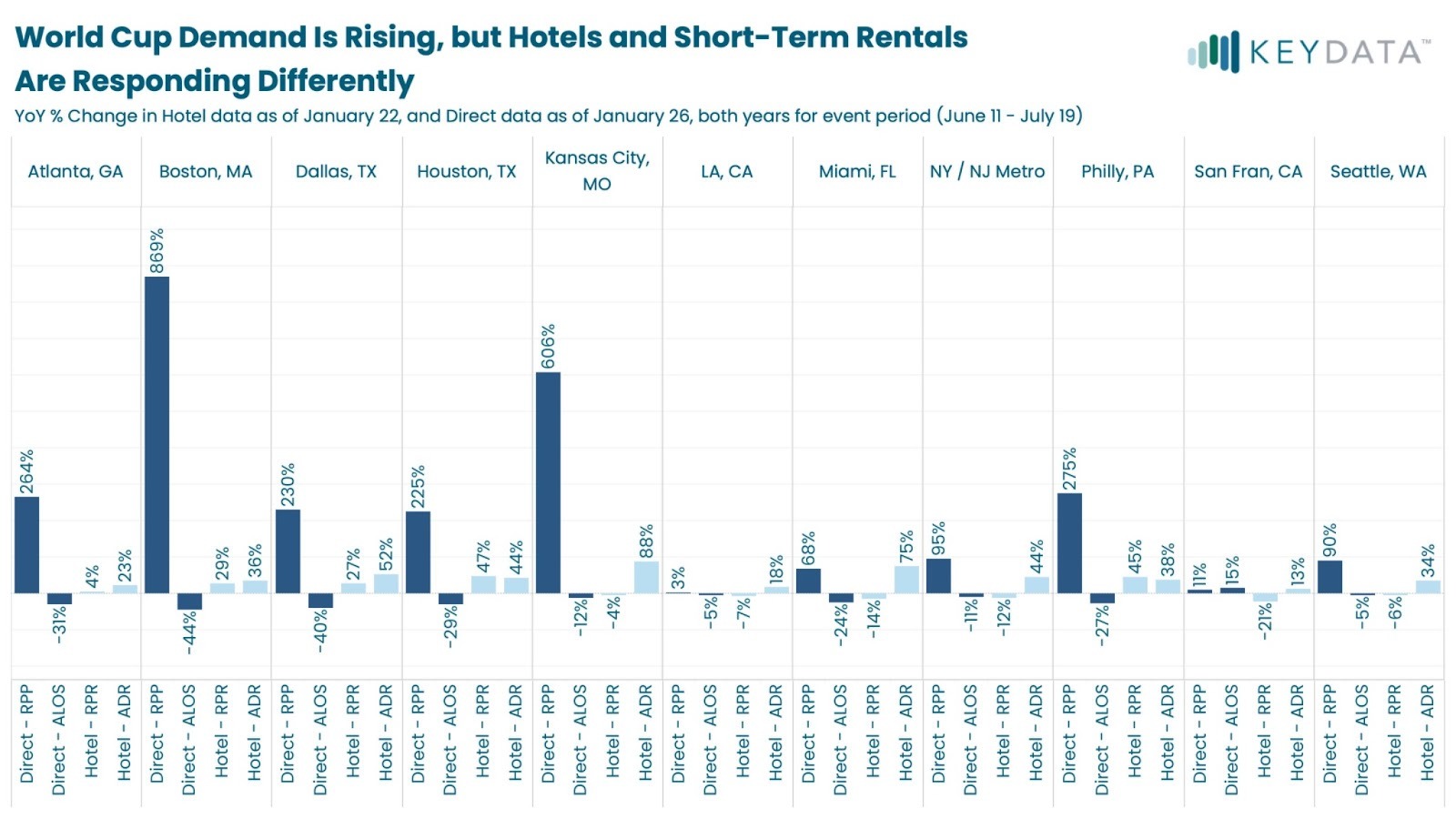
Direct - RPP: Direct Source Data - Reservations per Property
Direct - ALOS: Direct Source Data - Average Length of Stay
Hotel - RPR: Hotel Data - Reservations per Room
Hotel - ADR: Hotel Data - Average Daily Rates
World Cup demand is being absorbed differently across lodging types in host and adjacent markets. On the hotel side, booked rates are rising sharply in most markets, even where guest check-ins are flat or declining, signaling strong pricing power and early capture of short, event-driven stays. Short-term rentals, by contrast, are seeing significant increases in bookings per property in several markets, but those gains are often accompanied by declining average length of stay, reflecting a shift toward shorter, match-focused trips. Together, these trends suggest that demand is not concentrating in a single segment, but instead fragmenting based on traveler needs and lodging flexibility.
For destinations, this divergence has real implications. When lodging supply is misaligned with demand, travelers encounter fewer viable options, higher friction, and uneven pricing. Some shorten their trips, some shift lodging types, and some choose not to travel at all. The result affects not just lodging revenue but overall visitor experience and downstream economic impact.
How DMOs Can Prepare for World Cup and Major Event Travel
- Plan for fragmented demand. World Cup travel does not flow evenly into one lodging type. Hotels and short-term rentals absorb different traveler needs, and both must be considered when planning for capacity and visitor experience.
- Encourage pre- and post-event stays. Match-driven demand often results in short visits. Promoting extended itineraries can help spread visitation beyond peak nights and increase total economic impact.
- Align messaging across lodging types. Clear, consistent communication around transportation, venue access, and peak demand periods helps travelers plan confidently and reduces friction across accommodations.
- Monitor pricing and availability trends early. Strong pricing power can emerge well ahead of the event. Understanding where rates are rising fastest allows destinations to anticipate affordability and access challenges.
- Support flexibility in the lodging ecosystem. Short-stay demand benefits from adaptable policies across hotels and short-term rentals. Encouraging readiness on both sides helps ensure sufficient options for visitors.
- Promote neighborhoods beyond core venues. Highlighting areas outside the immediate event footprint can help distribute demand more evenly and relieve pressure on central zones.
- Coordinate with local stakeholders early. Collaboration between DMOs, lodging operators, and local partners is critical to balancing visitor volume, experience quality, and community impact during large-scale events.
The World Cup represents a rare opportunity for destinations, but it is also a stress test. Markets that treat it as a coordinated ecosystem challenge — rather than a simple demand spike — will be best positioned to deliver a positive experience for visitors and lasting value for the destination itself.