


Key Takeaways:
- Successful DMOs align a clear mission with government, residents, and professional property management companies so tourism growth supports the local economy and quality of life.
- Use neighborhood storytelling, a shoulder-season strategy, and event moments to drive demand and demonstrate impact.
- Build credibility by testing campaigns, reporting outcomes transparently, and using market intelligence to support better decisions.
Destination marketing organizations (DMOs) are under growing pressure to prove tourism ROI, justify public funding, and compete for increasingly fragmented traveler attention. Stakeholders today expect clear economic impact, alignment with the community, and measurable outcomes.
At the same time, DMOs are combining data-driven strategy, strong community partnerships, and highly targeted marketing to attract the right visitors at the right time while protecting residents' quality of life.
According to the U.S. Travel Association, travel spending generated $2.9 trillion in total economic output in 2024 and supported more than 15 million U.S. jobs, reinforcing why destinations must demonstrate measurable performance and long-term value.
Demonstrating this impact requires comprehensive lodging and demand data to understand visitor behavior, track market performance, and guide decision-making.
In this article, we’ll review some DMO examples that illustrate how you can drive tourism growth through strategy, measurement, and collaboration.
What Makes a Successful DMO?
Clear Mission and Stakeholder Alignment
A strong DMO starts with a mission that’s specific enough to guide decisions and broad enough to unite stakeholders.
Key ingredients:
- Define target visitors and tourism goals (who your target audience is, when you want them to visit, and why).
- Balance growth with community outcomes (resident quality of life, seasonality, workforce infrastructure).
- Align early with local partners:
- Local government and policy stakeholders.
- Hotels and professional property management companies.
- Attractions, event organizers, and businesses impacted by tourism.
It unlocks:
- Less conflict over more tourism vs better tourism.
- Clearer priorities for campaign spend, event strategy, and partner collaboration.
Data-Driven Decision Making
Successful DMOs consistently treat data as a planning tool, tracking:
- Visitor trends (seasonality, length of stay, booking lead time, event lift).
- Market performance across lodging types (hotels + short-term rentals).
- Economic indicators (room nights, revenue, tax impacts, visitor spending).
The U.S. Bureau of Economic Analysis reports that the travel and tourism industry’s real output increased 7% in 2023, highlighting the scale of the opportunity and the importance of measuring the driving factors.
To turn insights into actions, you should:
- Establish baselines (current month vs. previous year vs. market).
- Identify where performance diverges (which submarkets, which segments, which periods).
- Prioritize action (campaign focus, partner activation, event timing).
Strategic Marketing and Brand Positioning
- Differentiate yourself with a clear narrative that highlights why your destination stands out from others.
- Your campaigns should tell a story built around experiences and audiences.
- Ensure multi-channel execution:
- Paid search/social and creator partnerships.
- Co-op campaigns with hotels and property management companies.
- Event-driven marketing campaigns
- Stakeholder-ready reporting that demonstrates what changed and why.
3 Destination Marketing Organization Examples
1. Visit Philadelphia - Urban DMO Driving Year-Round Demand
Large urban destinations face a unique challenge: attracting visitors while managing congestion, resident sentiment, and intense competition from peer cities.
Philadelphia receives millions of annual visitors drawn to historic landmarks, cultural institutions, major sporting events, and convention business.
Philadelphia shifted from single-district promotion toward multi-neighborhood storytelling, encouraging visitors to explore beyond core tourist zones.
Some key tactics include:
- Promoting diverse neighborhood experiences to spread economic benefits.
- Running shoulder-season campaigns that attract leisure travelers outside peak convention periods.
- Leveraging major events to extend stays and increase visitor spending.
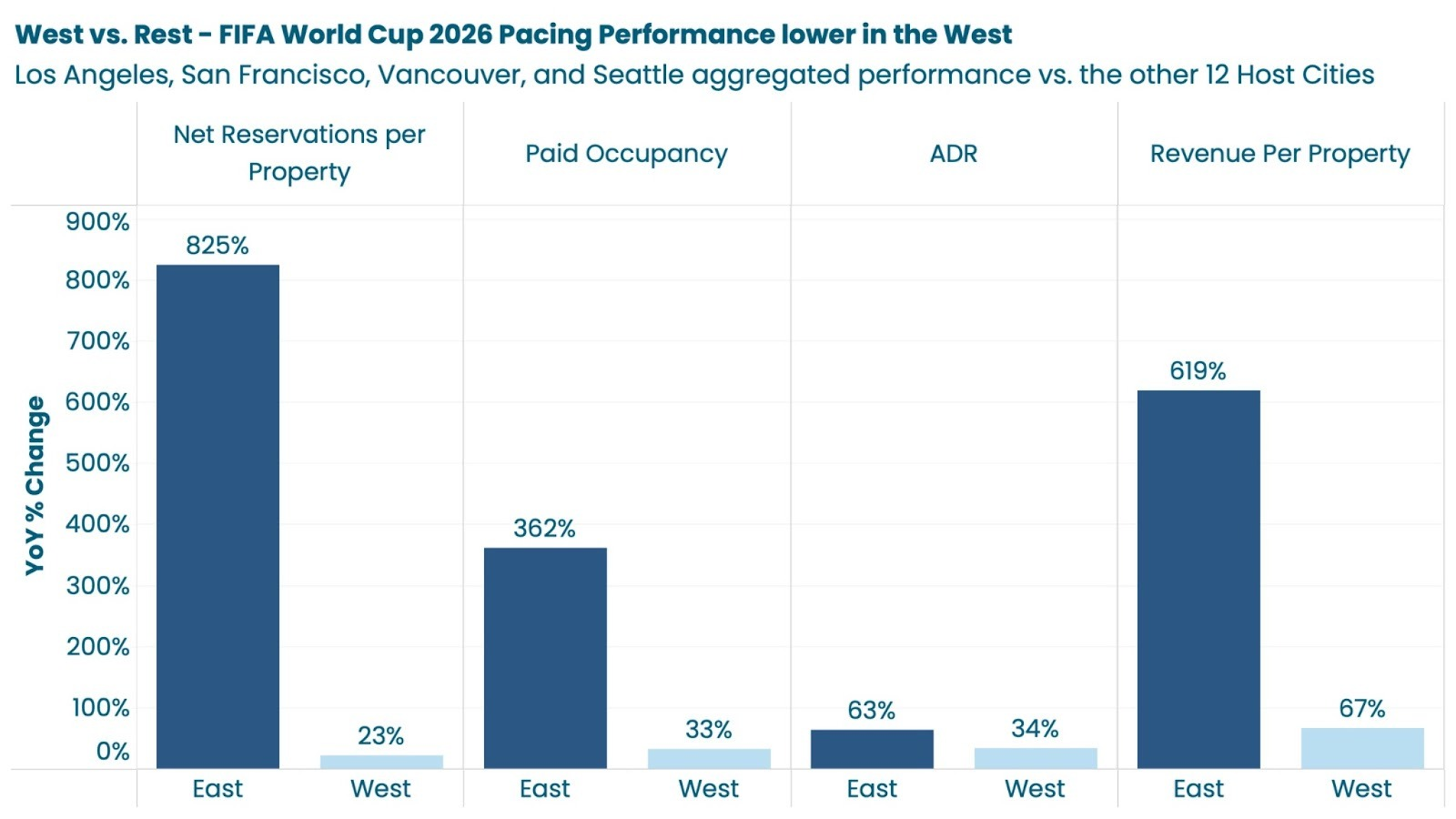
Following the FIFA World Cup 2026 schedule release, host cities recorded an average +29% increase in net reservations per property and a +25% jump in ADR year-over-year during the announcement week alone.
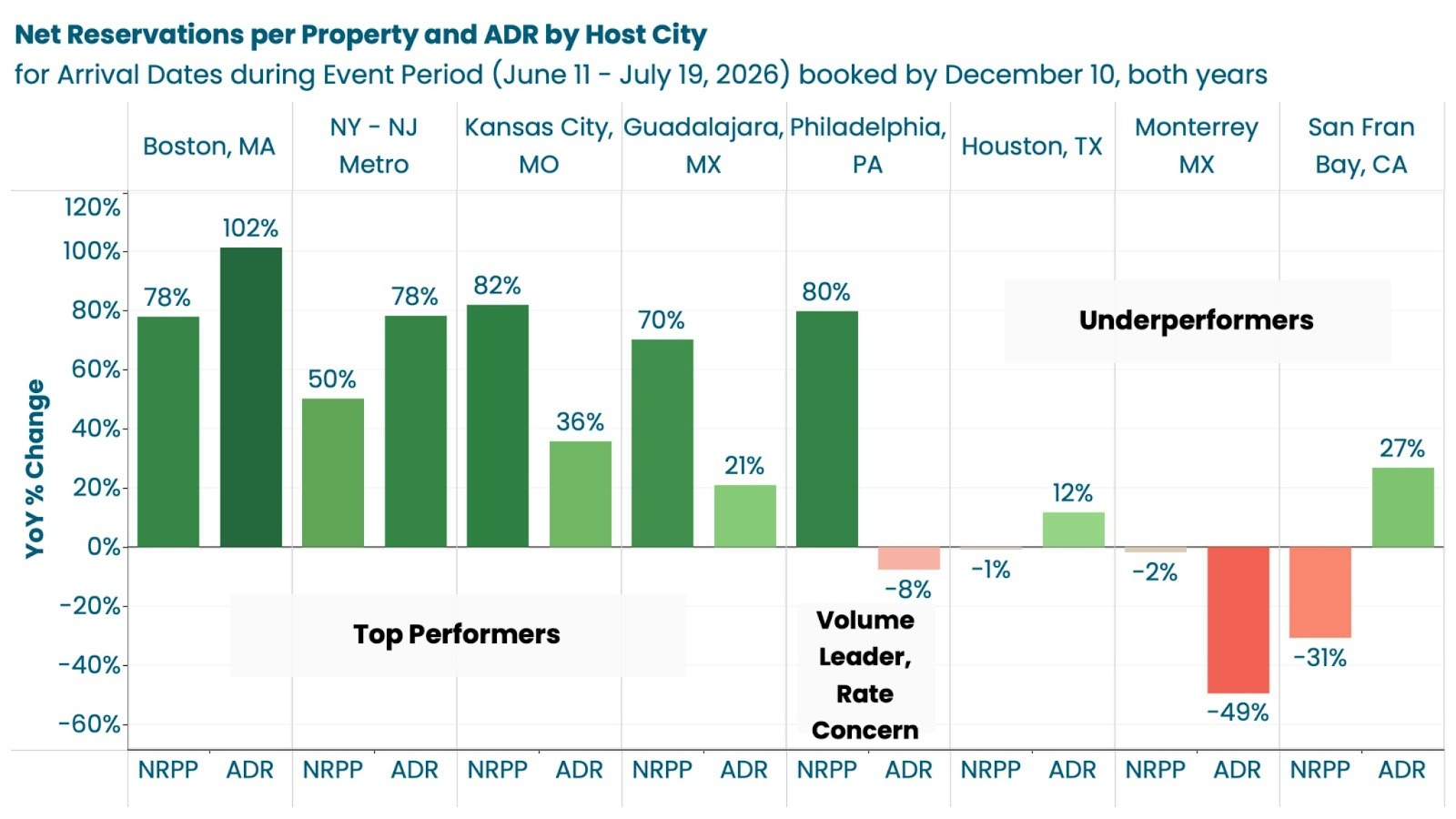
During the tournament period, performance accelerated dramatically, with nights sold up by +298% and RevPAR rising by +552%, highlighting how quickly event-driven demand can reshape urban tourism markets.
Modern tourism measurement requires visibility across all lodging supplies, so you should consider:
- Tracking lodging performance across hotels and professionally managed short-term rentals.
- Monitoring booking pace and demand shifts to evaluate campaign impact.
- Sharing transparent economic reporting with city leadership and industry partners.
Advanced tools like DestinationData can help you understand market-level performance trends and visitor behavior. It gives you access to the market intelligence you need to make informed decisions.
2. Explore Asheville - Regional Destination Balancing Growth and Livability
Regional and resort-style destinations often face the opposite challenge: maintaining sustainable growth while demand grows.
Asheville, North Carolina, attracts visitors through outdoor recreation, arts and culture, culinary tourism, and mountain experiences. Its tourism profile is heavily leisure-driven and highly seasonal.
Rather than chasing constant growth, Asheville focuses on demand management by strategizing for:
- Seasonal campaigns that encourage off-peak travel.
- Experience-led marketing around arts, wellness, and outdoor recreation.
- Messaging designed to attract visitors aligns with community values.
According to the National Park Service, U.S. national parks recorded more than 331 million recreation visits in 2024, underscoring sustained demand for outdoor destinations.
Regional DMOs are increasingly relying on supply-and-demand insights to understand:
- Where visitors originate from.
- Length of stay.
- How travel behavior changes during events or seasonal transitions.
Our America 250 travel analysis shows how early demand signals emerge for major national events. As of October, occupancy pacing rose to 9% year-over-year, while national booking windows averaged 331 days in advance in Washington, D.C., confirming that travelers are committing nearly a year ahead.
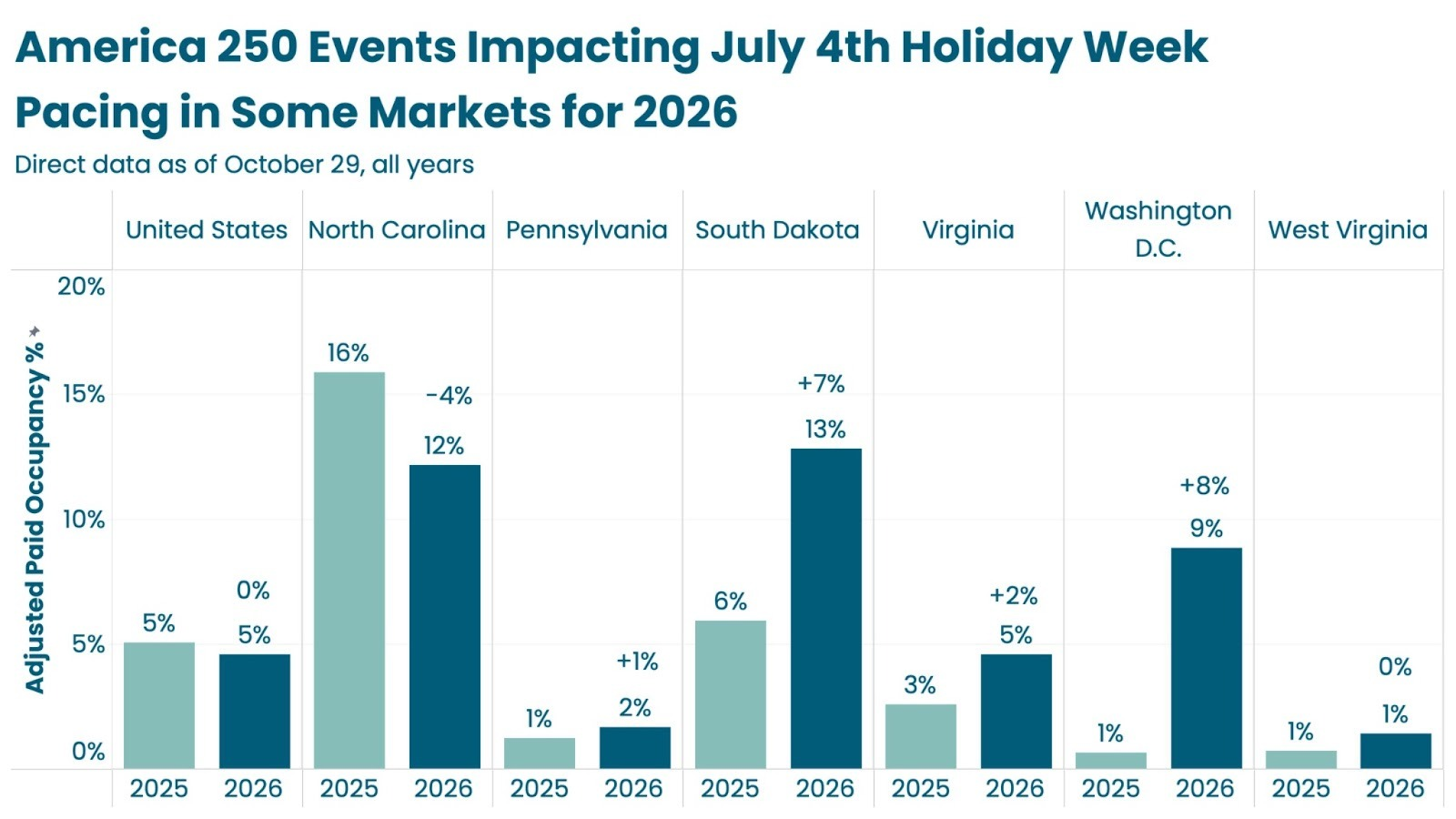
These early pacing indicators give you time to refine campaigns, align partners, and prepare for peak demand well in advance.
3. Greater Zion - Emerging Destination Scaling With Partnerships
Smaller or emerging destinations often lack large marketing budgets but can still achieve an outsized tourism impact through focus and collaboration.
Greater Zion in Utah has evolved into a gateway destination for national park tourism, leveraging its proximity to Zion National Park while building its own identity
You can succeed by concentrating your resources on:
- Niche positioning around outdoor adventure and regional experiences.
- Partnership-driven campaigns with local operators and tourism businesses.
- Event amplification that extends visibility beyond peak seasons.
Our Sundance Film Fest analysis demonstrates how even a single event can significantly shift destination performance. During the 2025 festival in Park City, the paid occupancy increased 18% week-over-week, ADR climbed 17% to $810, and RevPAR surged 72%.
These shifts highlight how event data can help you quantify real economic impact and plan future strategies.
To prove value in smaller destinations and secure funding, you must demonstrate:
- Tourism’s contribution to local revenue.
- Demand growth trends.
- Measurable community benefits.
Key Data allows you to show performance trends and support strategic planning decisions.
Applying These Lessons to Your DMO
Start With the Data Foundation
- Audit current tourism data sources and identify visibility gaps.
- Track performance across all lodging types, including hotels and professionally managed short-term rentals.
- Establish baseline metrics before launching new campaigns.
- Monitor booking pace, seasonality patterns, visitor origin markets, and demand shifts.
Define Clear Goals and KPIs
- Determine what success looks like for your destination:
- Visitor growth
- Total tourism revenue
- Improved shoulder-season demand
- Balanced community impact
- Set measurable targets tied to economic outcomes, not just marketing outputs.
- Align KPIs with local government priorities and stakeholders.
- Ensure reporting clearly connects marketing activity to measurable results.
Build Stakeholder Partnerships
- Engage hospitality operators and property management companies early and consistently.
- Create feedback loops that enable industry partners to validate market trends in data.
- Share insights regularly to improve transparency and trust.
Test, Measure, and Refine
- Start with focused campaigns tied to specific objectives.
- Measure performance against baseline data instead of assumptions.
- Use early demand signals to adjust messaging, targeting, or timing.
- Share outcomes transparently with stakeholders to build trust and credibility.
- Scale successful initiatives and retire tactics that don’t deliver measurable impact.
Drive Tourism Growth With Data and Strategy
To succeed as a DMO, you need consistency in three areas:
- Set a clear destination strategy.
- Align stakeholders across the visitor economy.
- Use comprehensive data to prove impact.
Use insights to plan proactively, time campaigns more effectively, and optimize continuously across seasons and submarkets.
Leading DMOs are using comprehensive tourism data—including short-term rental performance—to make smarter marketing decisions and demonstrate measurable impact. Request a demo today to see how DestinationData equips you with the market-level insights you need to track tourism trends, support policy planning, and prove ROI to stakeholders.