
.png)


The Austin F1 Race continues to be a high-impact tourism event, offering valuable lessons about how visitor demand unfolds across the lodging sector. A comparison of 2024 and 2025 booking behavior reveals two major trends: a strong alignment between hotel and vacation rental bookings, and a noticeable compression in booking windows.
While the race itself provides a compelling case study, the underlying trend extends far beyond a single event. Vacation rental demand consistently serves as a leading indicator of visitation — not just during headline events, but throughout the year. Businesses that recognize and act on these signals can make smarter decisions across marketing, staffing, and operations.
Hotels and Vacation Rentals Move in Sync
The analysis shows a notably strong alignment between hotel and vacation rental demand in Austin. In 2025, weekly guest night volumes across both segments tracked closely, reflected in a correlation, or “r” value, of 0.91, where a value of 1 indicates a perfect positive linear correlation. This indicates that periods of high hotel demand were almost always mirrored by elevated vacation rental activity, reinforcing the close linkage in booking behavior across the two lodging types.
This relationship is more than just statistical alignment. It has real-world operational value. Because vacation rentals tend to book earlier than hotels, they can offer predictive insights that help hoteliers anticipate future demand. In this way, vacation rentals serve as a reliable early indicator for hotel performance in Austin.
Booking Windows Are Compressing
When comparing booking behaviors between 2024 and 2025, a shift becomes evident. Travelers are booking closer to the event date than they did in the prior year. Both hotels and vacation rentals saw a drop in bookings made more than 180 days in advance and a rise in those made within the 30 to 179 day range.
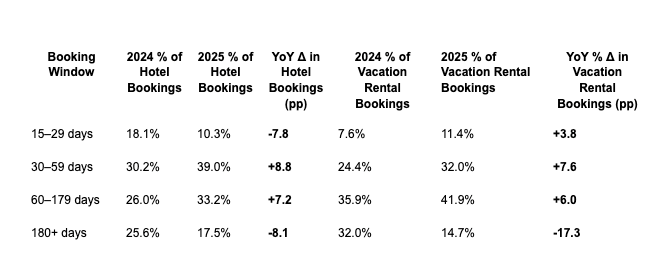
In particular, vacation rentals saw a 17.3 percentage-point drop in bookings made 180 or more days out, and a corresponding pickup in bookings within the 30 to 179 day range. Hotels followed a similar pattern, although the early-window drop was less pronounced.
This shift indicates a compressed booking curve in 2025, with travelers concentrating their booking activity closer to the event compared to 2024.
Vacation Rentals Provide a Clear Demand Signal
Although both lodging segments are shifting toward more mid-term bookings, vacation rentals continue to book earlier than hotels. This gives hotels a clearer look at near-term demand trends. Since vacation rental bookings are typically made by individual travelers rather than large corporate groups, they often reflect real consumer intent sooner and more directly than hotel bookings.
The predictive value of vacation rental demand is becoming more pronounced as booking curves shorten. Hotels can use these early signals to adjust pricing, manage availability, and plan staffing. For events like the F1 Race, where booking patterns can shift quickly, early insights make a meaningful difference.
Strategic Takeaways for Hoteliers
For hotel operators, monitoring vacation rental trends offers several strategic advantages. These early signals can inform pricing strategies, guide inventory controls, and shape operational planning. When vacation rentals start to book up, hotels can respond quickly to capture remaining demand.
Destination marketing organizations and tourism analysts can also benefit by incorporating vacation rental lead times into their demand forecasting models. Understanding when and how travelers are booking allows for more effective marketing campaigns and more accurate projections.
Strategic Implications for Destination Businesses
Restaurant Chains
National and regional restaurant operators located near downtown, the circuit, or key lodging zones can use this booking data to align staffing and inventory with expected surges. The clear trend toward mid-window bookings means restaurants should prepare for spikes in reservations and walk-in traffic starting around three to six months before the event. This is also an optimal window for targeted local advertising and seasonal menu planning, particularly for upscale or experience-driven dining.
Luxury Retail
High-end retail outlets and shopping centers can benefit from pacing insights by tailoring promotions to match when guests are booking and arriving. By tracking vacation rental demand, which signals intent earlier than hotels, retailers can anticipate foot traffic patterns and align VIP events, limited-time offers, and new product drops with expected peaks. Data from the Destination Business Profile suggests that brands using zip code-level feeder market data can better target high-value shoppers before they arrive.
Car Rentals
With shorter booking curves, car rental operators must be more agile in their fleet planning. The sharp drop in 180+ day bookings suggests that holding too much inventory too far in advance may be less efficient. Instead, operators should focus on flexible inventory allocation in the 60 to 30 day range, when both lodging and air bookings become more active. Knowing when vacation rentals are being reserved can also help forecast where and when renters will need vehicles, especially for longer stays in suburban or vacation areas.
Tour Guides and Attractions
Attractions and tour operators are especially sensitive to visitor volume and timing. As vacation rentals book earlier and offer a forward-looking indicator, tour businesses can use this data to forecast demand and optimize tour schedules. Operators should align their capacity and marketing spend with the compressed booking curve — focusing heavily on the 30 to 90 day window. Advance sales, bundled offers, and dynamic pricing strategies can also benefit from this kind of pacing visibility.
Local Activity Providers
Local experience-based businesses such as paddleboard rentals, bike tours, or food crawls can tie their promotional efforts to booking curves. Since booking windows are shifting closer to the event, businesses that traditionally relied on early planning will need to stay active in the mid-window with social media and local DMO partnerships. Shorter booking windows also mean faster decision cycles, so having real-time availability and mobile-friendly booking options is critical.
The Austin F1 Race provides an excellent case study of how vacation rental demand can signal broader shifts in visitor behavior. It highlights how changes in booking timing and volume ripple across hotels, restaurants, retailers, and experience-based businesses. But this trend is not limited to one event or one city. Across markets and throughout the year, vacation rental demand consistently acts as an early signal of visitor intent. Whether for a major event like the F1 Grand Prix or peak travel seasons in coastal and urban destinations, watching vacation rental pacing provides businesses with a valuable head start.
For operators and marketers across the destination economy, the message is clear: vacation rentals are not just part of the demand curve; they are the first visible sign of it, all year long.