



Key Takeaways
- Average Daily Rate (ADR) measures the average revenue per occupied night. Unlike RevPAR, it excludes unbooked nights.
- ADR informs revenue optimization, performance benchmarking, owner reporting, and seasonal forecasting.
- PMCs often misinterpret ADY by comparing mismatched units, relying on scraped OTA data, or chasing high rates at the cost of occupancy.
- Pair ADR with occupancy (RevPAR), booking window, and market benchmarking for a complete performance strategy.
- With verified, first-party reservation data, Key Data helps your PMC avoid errors and turn ADR into a reliable growth and retention tool.
ADR Isn’t Just a Number—It’s a Strategy Lever
In the world of hyper-competitive short-term rentals, knowing your ADR (Average Daily Rate) isn’t enough. You must understand how to use it to drive revenue, benchmarking, and owner trust. Many PMCs track ADR diligently, yet struggle to turn it into growth.
The challenge has become sharper with the shift in the market dynamics. In 2024, supply growth in the U.S. short-term rental market cooled to just 6.9% year-over-year, which tightened vacancy and gave properties with better rate control a competitive edge.
ADR often gets misunderstood because it doesn’t account for unbooked nights, market context, or pacing dynamics. Without clean data and a proper comparison set, you may draw the wrong conclusion from your numbers. On the other hand, with proper market context and accurate data, you can determine whether a rate change was based on your actions—or just market fluctuations.
In this article, we’ll review ADR, why it matters, common pitfalls, and how to use it within a smarter performance strategy for the long-term success of your property management company.
What Is ADR and How Is It Calculated?
The Average Daily Rate is the average revenue earned per occupied night. It reflects the average amount guests pay per night when a booking is made.
- ADR = Total revenue from booked nights / Number of nights booked
For instance, if your portfolio earns $6,000 from 30 booked nights, then ADR = $6,000 / 30 = $200.
- ADR does not include unbooked nights (so vacant rooms/properties are excluded).
- ADR differs from RevPAR, which accounts for availability and gives a complete picture of revenue efficiency.
- RevPAR = ADR x Occupancy rate (or) RevPAR = Total revenue / Total available nights.
- Unlike ADR, RevPAR includes unoccupied inventory in its denominator, so under-utilization can pull it down.
Why ADR Matters to Property Management Companies
If you treat ADR simply as a reporting number, you’ll miss its potential power as a lever for pricing, operations, and owner confidence. Here are some of the core areas where ADR can be a strategic metric when used correctly:
- Revenue Optimization
- ADR is your pricing anchor; raising it during high-demand nights can boost nightly revenue without filling additional nights.
- However, pushing ADR too far without demand can backfire, so you need to test rate tiers against booking sensitivity.
- Using ADR trends can help you spot nights with increasing rates, rather than chasing volume, which will yield more revenue.
- Performance Benchmarking
- Benchmarking ADR against a comp set (matching size, location, and amenity level) reveals underperforming units.
- If one four-bedroom unit lags in ADR versus peers, it may indicate a missed pricing opportunity or operational deficits.
- Over time, consistent ADR benchmarking can help you align your portfolio’s pricing with market expectations.
- Owner Reporting and Trust Building
- Homeowners often see revenue totals, but an ADR vs. market comparison clarifies where you added value.
- You can show, “Your ADR is X% above/below market average this month,” which can help you justify your rate strategy and management fees.
- Transparent ADR reporting helps reduce owner churn—when owners understand that you’re executing rate with a data-backed strategy and not just guessing.
- Forecasting and Seasonal Planning
- Trends in ADR movement (upward, flat, downward) indicate shifts in demand that inform forward pricing and staffing.
- During shoulder or off-peak seasons, ADR trends can guide decisions like whether to push promotions or guarantee occupancy.
- You can incorporate ADR projections into revenue models and budgeting decisions—layered over occupancy forecasts.
Common ADR Mistakes—and How to Avoid Them
Sometimes, even seasoned PMCs can misinterpret ADR when relying on incomplete or misleading data. Here are some of the most common pitfalls and how you can prevent them with the right tools.
- Unit Mismatch in Comparisons
- A four-bedroom waterfront home will naturally command a higher ADR than a one-bedroom condo inland.
- Comparisons are skewed without normalizing for unit type, bedroom count, and amenities.
- Key Data’s comp-set filters can allow you to compare like-for-like properties, ensuring accuracy.
- Scraped Data Pitfalls
- Online Travel Agency (OTA) scraping often captures listed rates, but not the actual booked rates.
- These can misrepresent ADR by showing inflated averages, especially when homeowners block dates or set aspirational prices.
- Key Data directly sources ADR from first-party reservation data across 700,000+ units worldwide, eliminating false signals.
- Ignoring Pace and Lead Time
- ADR can shift significantly depending on the booking window.
- For instance, last-minute bookings may push ADR down, while long-lead holiday bookings push it higher.
- Ignoring pacing trends can result in misinterpreted performance.
- With Key Data, you can track booking pace and lead-time trends alongside ADR to see the complete picture.
- Chasing ADR Over Profitability
- A high ADR may appear favorable on its own, but overall revenue (RevPAR) may suffer if occupancy levels decline.
- Chasing ADR can make your properties appear overpriced and reduce bookings.
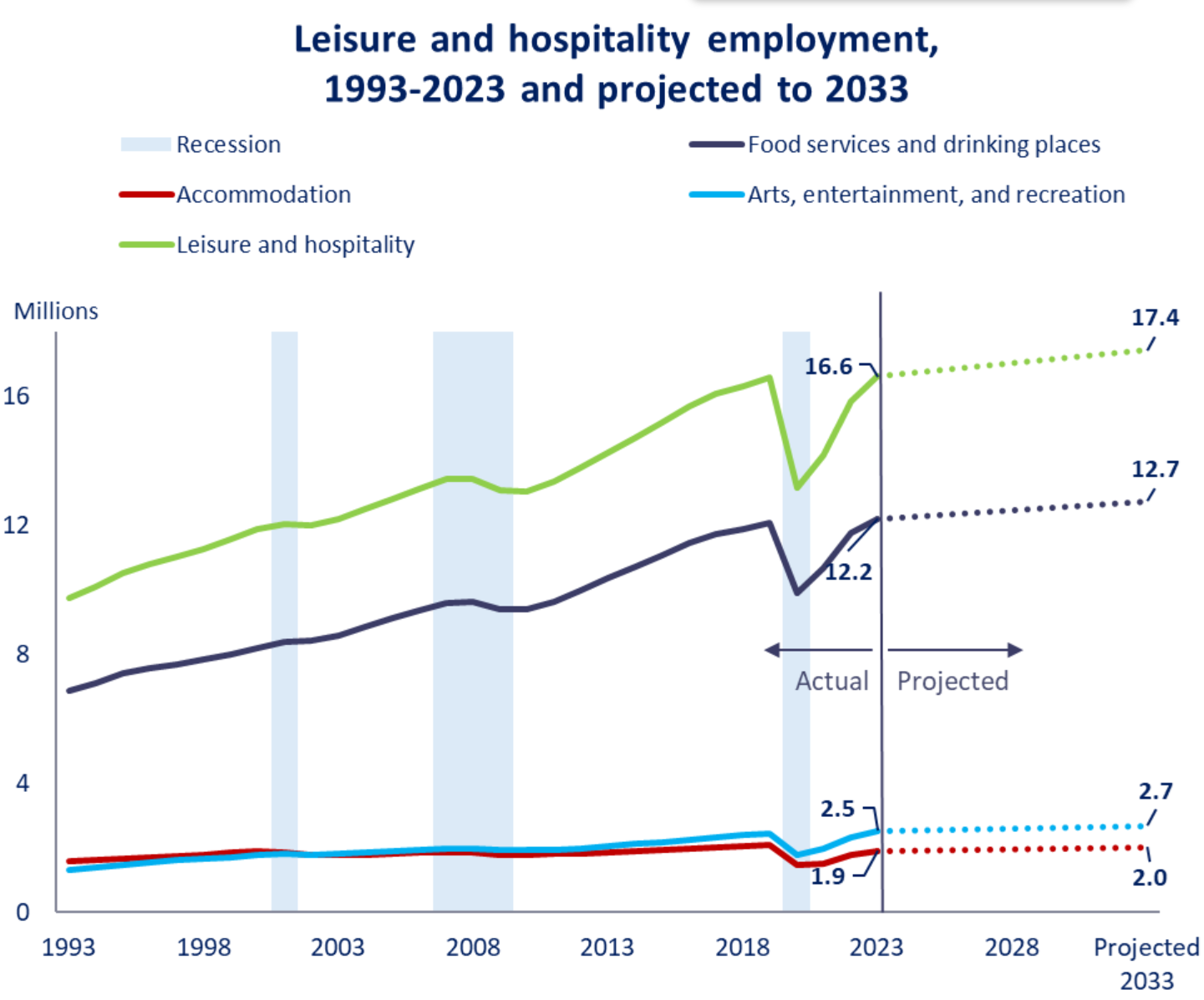
According to the U.S. Department of Labor, employment in the leisure and hospitality sector is expected to rise to 17.4 million by 2033. In such a high-stakes market, relying on inaccurate or scraped data can lead to poor decisions, frustrated owners, and lost revenue opportunities.
How to Use ADR in a Larger Performance Strategy
When you pair ADR with the right complementary metrics, it becomes a powerful tool. Here’s how you can frame it:
- ADR + Occupancy = RevPAR
- This formula gives you the revenue efficiency of your nights; even high ADR won’t matter if occupancy collapses.
- Use this to detect when your pricing is too aggressive or too soft.
- With Key Data dashboards, you can view ADR and occupancy side by side, filter by property type, and spot revenue dips that wouldn’t surface with ADR alone.
- ADR + Booking Window = Smarter Pricing Timing
- The booking window (lead times) indicates how far in advance your guests are making reservations.
- If long-lead bookings are trending, you can push ADR earlier; if last-minute bookends dominate, you may need flexibility.
- Key Data’s pacing and lead time filters let you layer ADR against booking window trends, helping you fine-tune rate cadence for seasonality.
- ADR + Market Benchmarking = Pricing Posture Check
- Comparing your ADR to a filtered comp set reveals whether your pricing is too conservative or too aggressive.
- When your ADR trails behind the market by a margin, you know there’s a pricing gap; when you lead the market, it indicates room for defensibility.
When you use ADR as part of these combined frameworks, you can transform it from an isolated metric into a diagnostic tool. You can adjust pricing, detect pacing issues, and validate your strategy against market norms.
Track ADR Like a Pro, Not a Host
ADR isn’t just a number in your monthly reports; when used strategically, it can unlock growth, owner retention, and long-term profitability. By using ADR alongside occupancy, pacing, and benchmarking data, you can make more informed pricing decisions, demonstrate value to owners, and forecast with confidence.
The primary difference between being a casual host and a professional property manager lies in how you use your data. You can leverage Key Data to transform ADR into a performance insight engine, validating strategies and uncovering opportunities backed by real, first-party reservation data.
Want to see how your ADR stacks up across your market? Request a demo today and learn how Key Data helps professional property managers track and improve performance with real data.